
What the Data Says About Indian Youth Unemployment — Without the Spin
The Cockroach Janta Party tapped a real grievance. This article summarises the publicly available data on Indian youth unemployment, points to the primary sources, and explicitly flags what we do not know.
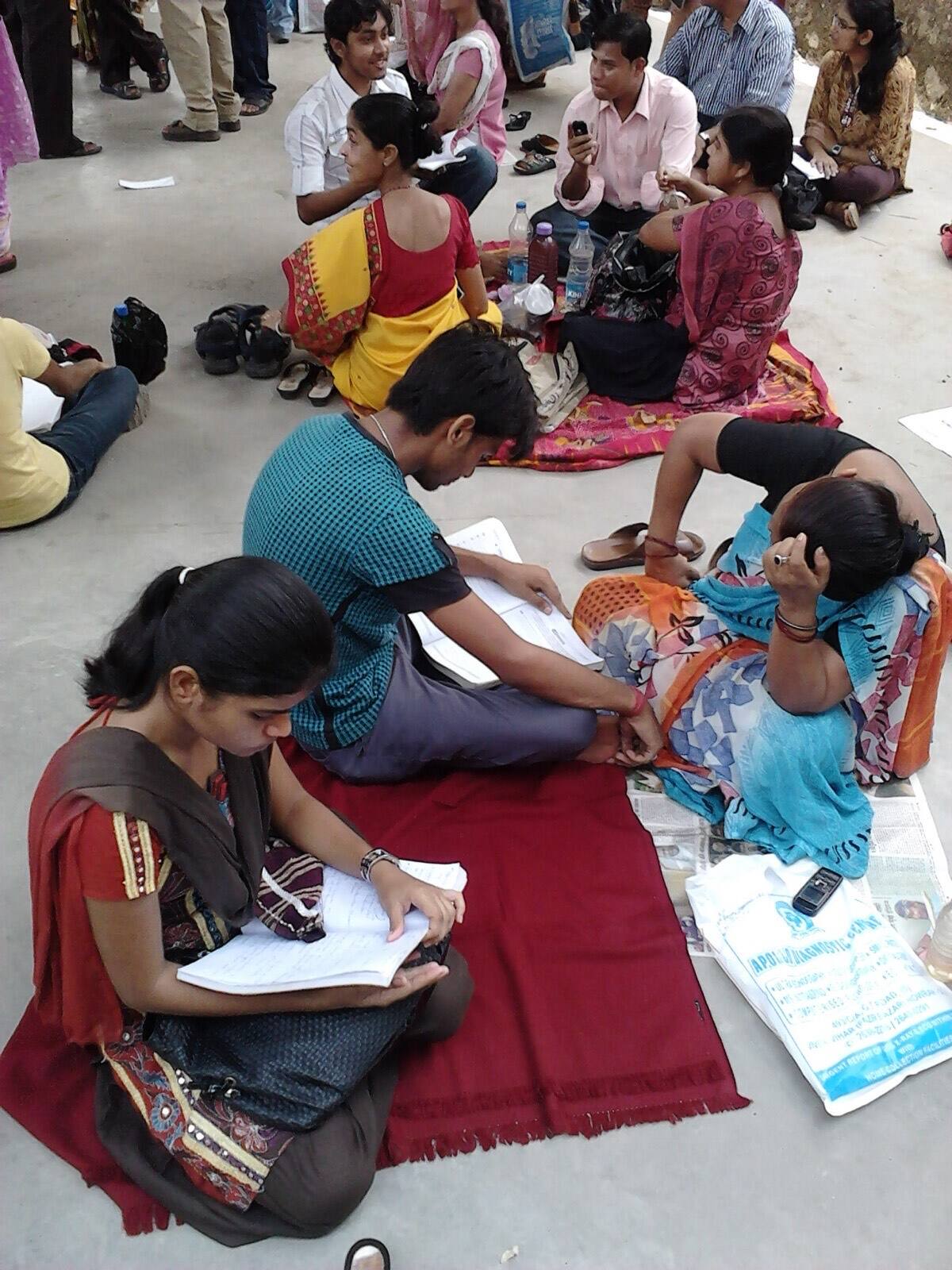
The grievance is real. The numbers are contested.
The CJP's sloganeering — "Voice of the Lazy & Unemployed" — only resonates because the unemployment question is a real, documented public concern in India in 2026. The CJP newsroom takes the data seriously, which means we publish the data with the caveats.
The two main public data sources
There are two primary public data series on Indian labour markets, and they tell a statistically different story about the same country. The CJP newsroom flags the difference honestly.
1. PLFS — Periodic Labour Force Survey (MoSPI)
The Periodic Labour Force Survey is published by the Ministry of Statistics and Programme Implementation (MoSPI). It is the official Government of India household survey. The PLFS uses the Current Weekly Status (CWS) and Current Daily Status (CDS) approaches, and reports an unemployment rate for the 15–29 age cohort (the standard "youth" definition).
For the most recent annual PLFS at time of writing, the youth unemployment rate is in the low double digits — meaning roughly 1 in 10 young people in the labour force is unemployed on a CWS basis. This is the figure the government typically cites.
2. CMIE — Centre for Monitoring Indian Economy
The CMIE is a private-sector data firm. Its Consumer Pyramids panel is a continuous household survey, and its unemployment estimates are typically much higher than the PLFS, sometimes by a factor of 2–3. The CMIE definition of "unemployed" is broader; the panel coverage is more current; and the methodology is independent of the government.
Why the two numbers differ
The two surveys differ on:
- Definition of "unemployed." PLFS's CWS measures whether a person worked at least 1 hour in the past 7 days. CMIE measures willingness and ability to work. The definitional difference alone produces a gap.
- Reference period. PLFS is annual. CMIE is monthly.
- Sample size and coverage. PLFS is a much larger government survey; CMIE is a smaller continuous panel. Both have documented sampling concerns.
The honest answer is: the truth is somewhere in between, and the gap is itself a data-quality story.
What the CJP newsroom will and will not claim
We will claim:
- Youth unemployment in India is materially higher than the overall rate. Both data sources agree on this.
- The absolute level is contested between the government's PLFS and the independent CMIE panel. The PLFS is the official number; CMIE is the independent check. Both are linked above.
- The trend over the most recent 3–4 years is flat to slightly worsening in both series, with the youth cohort consistently above the headline rate.
We will not claim:
- An exact percentage. The two sources disagree, and we will not pick one and call it "the" number.
- That any one political party caused the trend. Labour-market outcomes in a country of India's size are driven by many factors: demographic structure, capital investment, education outcomes, female labour-force participation, and macroeconomic policy. A single-cause attribution would be unsourced.
- That the CJP's sloganeering is itself data. The slogan is a political statement. The data is the data.
Where to look yourself
If you want to verify these claims yourself, the primary sources are:
- PLFS portal — annual reports, methodology, raw tables.
- CMIE Consumer Pyramids — subscription required for the panel; CMIE publishes a free monthly unemployment estimate.
- RBI Handbook of Statistics — long historical time series, useful for context.
- World Bank ILO-modelled estimate — comparable across countries, useful for cross-country benchmarking.
The CJP newsroom will not paraphrase these for you. We will link them and let you read.
— CJP Newsroom
Note on transparency. The CJP newsroom is reader-funded and does not accept paid placements. We do not have a subscription with CMIE; we cite their public summary statistics and link to the primary source. If you spot an error in our reading of the data, write to us at the submission page.
Sources cited
CJP policy: every fact in this article is traceable to a public source. We never publish what we cannot verify.
- ›Periodic Labour Force Survey (PLFS), MoSPI — official portal — https://plfs.mospi.gov.in/
- ›Centre for Monitoring Indian Economy (CMIE) — Consumer Pyramids — https://www.cmie.com/
- ›RBI — Handbook of Statistics on Indian Economy — https://www.rbi.org.in/Scripts/PublicationsView.aspx?id=22646
- ›World Bank — Unemployment, youth total (% of total labor force ages 15-24) (modeled ILO estimate) — https://data.worldbank.org/indicator/SL.UEM.1524.ZS?locations=IN
Got a tip on this story? Our newsroom follows up on every lead. Reach us via the submission page.