MHA proposes Article 371 Chapter K for Ladakh assembly
MHA proposes a new Chapter K under Article 371 for Ladakh to create an elected UT assembly, but Sonam Wangchuk and Leh leaders seek a formal draft.
MHA proposes Article 371 Chapter K for Ladakh assembly
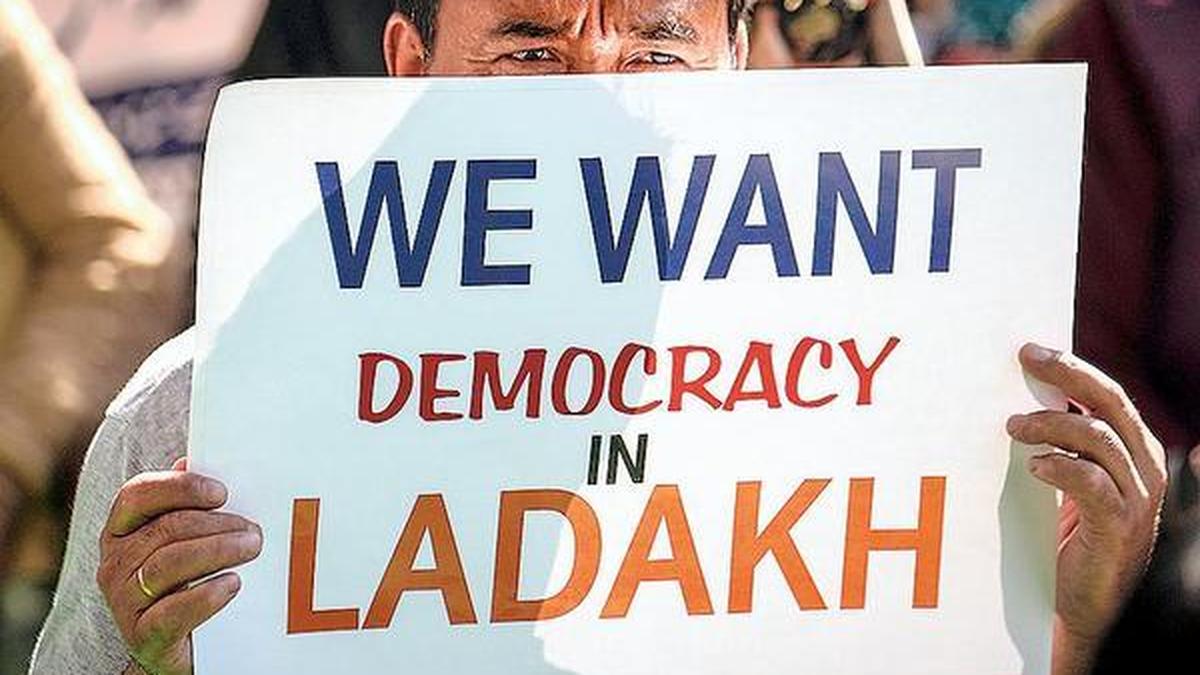
New Delhi: The Union Ministry of Home Affairs tabled a constitutional proposal Wednesday offering Ladakh an elected legislature under a newly framed Chapter K of Article 371. The offer came during high-stakes sub-committee negotiations in New Delhi with delegations from the Leh Apex Body (LAB) and the Kargil Democratic Alliance (KDA).
The meeting, held on September 9, addressed long-pending political demands following the suspension of Ladakh's proposed Kargil-to-Leh foot march. MHA representatives presented a framework establishing a directly elected Union Territory assembly empowered to legislate on land, cultural identity, language, forests, and natural resources.
Ladakh representatives emerged cautious. While welcoming progress on local resource governance, civil society leaders expressed disappointment that the government presented a conceptual slide deck rather than a formal statutory draft bill.
"We cannot say that the meeting was a complete success. We hoped to get a draft proposal assuring us protection under Article 371. However, that was not provided," climate activist Sonam Wangchuk told reporters after the session. "We have asked the government to take back the cases registered against protesters after last year's incident in Leh city. We hope that the way cases were withdrawn against Gen Z protestors in Delhi, it will be done in Ladakh, too."
The Chapter K framework
Article 371 currently governs special provisions across 12 states, ranging from 371A in Nagaland through 371J in Karnataka under Part XXI of the Constitution. The Centre's proposal would append Chapter K specifically for the Union Territory of Ladakh.
Under the MHA blueprint, the assembly would exercise legislative authority over subjects reserved under Article 240. However, central interlocutors stopped short of granting broad powers under State List (List II) and Concurrent List (List III) of the Seventh Schedule, declining to transfer administrative control over the police and public order to the proposed elected body.
Cherring Dorjay Lakruk of the Leh Apex Body pointed out that the discussion reiterated broad terms already outlined during the May 22 and July 3 rounds. "Even though they were shown a PowerPoint presentation mentioning Chapter K, they were not yet provided a detailed draft proposal by the MHA," Lakruk said.
Ladakh Chief Secretary Ashish Kundra described the discussions positively on social media: "Attended the sub-committee meeting with leaders of Ladakh at MHA in Delhi today. A general air of positivity prevailed as the broad contours of a sui generis model of governance under Article 371 of the Constitution were discussed. Deepening democracy is the goal."
Relief packages and case reviews
Beyond constitutional structure, the meeting addressed the aftermath of the September 24, 2025 violence in Leh, where four civilians died in police firing and over 80 were injured.
The Centre agreed to withdraw criminal cases against 24 individuals and committed to reviewing charges against 34 others on a case-by-case basis. Cases against 25 demonstrators had previously been revoked. MHA officials additionally assured financial compensation for the families of those killed and wounded during the 2025 unrest.
KDA representative Sajjad Kargili emphasized that the Ladakh Lieutenant Governor must avoid making irreversible administrative decisions—including the unilateral restructuring of hill councils in newly declared districts—before the constitutional amendment passes Parliament. Ladakhi leaders demanded that legislation enabling the elected body be introduced and cleared by a two-thirds majority in Parliament during the upcoming Winter Session.
The parties have agreed to reconvene for the next round of formal talks in the first week of October.
What we can verify
- Chapter K proposal tabled: MHA presented a constitutional provision under Article 371 (Chapter K) for a directly elected Ladakh assembly covering land, environment, culture, and natural resources. — The Hindu
- Police control withheld: The Centre refused to transfer police and law-and-order authority under Seventh Schedule lists to the proposed assembly. — The Times of India, The Hindu
- Delegation leaders present: Sonam Wangchuk, Cherring Dorjay Lakruk (LAB), and Sajjad Kargili (KDA) attended the Delhi talks alongside Ladakh Chief Secretary Ashish Kundra. — The Hindu, The Times of India
- Legal relief agreed: The Centre agreed to withdraw charges against 24 people, review 34 cases individually, and provide compensation to families of victims from the September 24, 2025 violence. — The Times of India
- October timeline set: The next round of sub-committee discussions is scheduled for the first week of October 2026. — The Times of India
What remains unverified
- Exact statutory text of Chapter K: MHA shared presentation slides but has not released the formal legislative draft text. [unverified]
- Winter Session parliamentary schedule: No official government notification confirms whether the constitutional amendment bill will be tabled during the upcoming Winter Session. [unverified]
Sources cited
CJP policy: every fact in this article is traceable to a public source. We never publish what we cannot verify.
Got a tip on this story? Our newsroom follows up on every lead. Reach us via the submission page.