
Youth Congress helpline fields 3,000 calls from students fearing police crackdown
The Indian Youth Congress SOS helpline has logged over 3,000 calls in one week from students facing FIRs, online abuse and family pressure after joining NEET paper-leak protests.
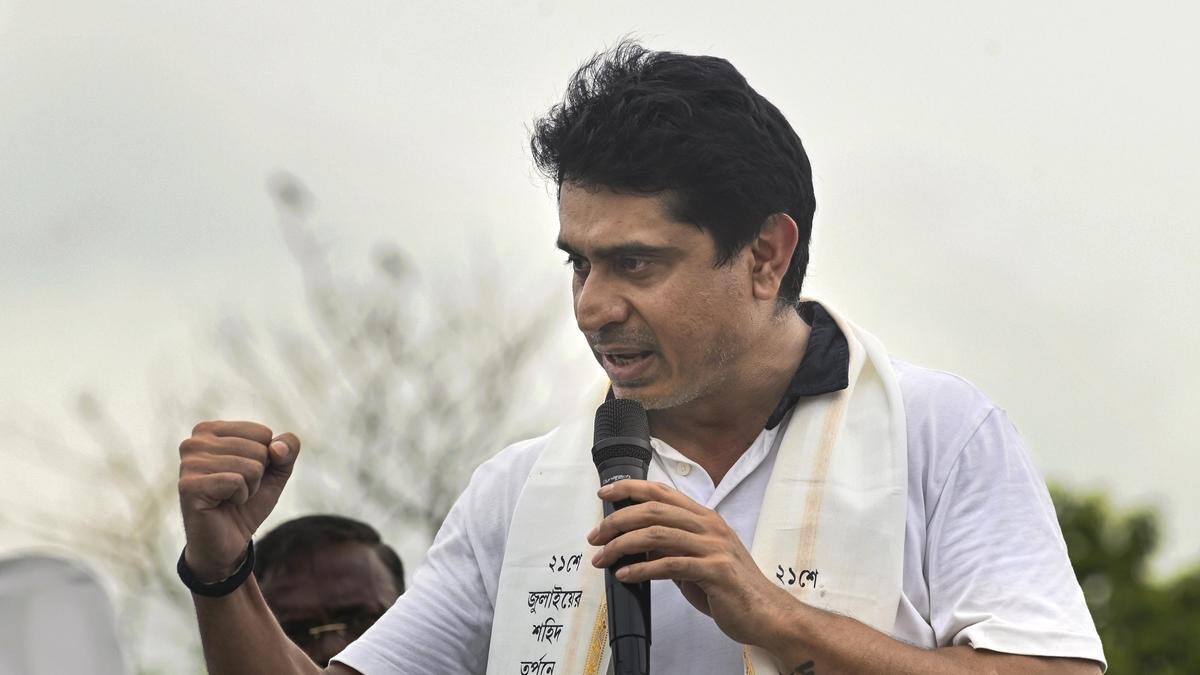
A helpline the Indian Youth Congress launched on July 27 has logged more than 3,000 calls from students who say they are being hounded by police, trolled online and cut off from their families after joining the protests against the NEET-UG paper leak.
The service — "SOS Chhatron Ki Goonj", staffed by young lawyers and party volunteers — was set up after the July 20 lathi charge at Jantar Mantar, when thousands of students marching toward Parliament were met with tear gas and batons. By the second day, the phones had already rung 1,080 times, and 55 of those callers needed immediate legal help, according to IYC officials.
"Many young students have left their homes out of fear, and their families do not know where they are," Uday Bhanu Chib, the IYC national president, told The Hindu on Sunday after visiting Bhagalpur with a Congress fact-finding team looking into the police response in Bihar. "They are the future of the country, and raising one's voice for one's rights is a democratic right."
"When students and young people needed support, the Indian Youth Congress did not remain a spectator," IYC National In-charge Manish Sharma said in a press release on July 29. "Through SOS Chhatron Ki Goonj, our workers and legal teams stood with them — from arranging basic assistance to ensuring legal support. The message is clear, no student fighting for justice will be left alone."
What the calls reveal
The volume and texture of the calls sketch a picture of what happened after the cameras left Jantar Mantar. A majority of the callers are women, the IYC said. According to the National Herald, more than 80 of the first-day cases required formal legal intervention — for alleged detentions, arrests, lathi charges, tracing detained persons, and helping families locate relatives.
Specific instances cited by the IYC: legal teams intervened at a Rajendra Nagar police station in Delhi after supporters were detained, staying until the formalities cleared and detainees walked out. A separate team worked at Kamla Market Police Station in East Delhi to secure the release of a detained group and their families. In Kolkata, four people were granted bail after IYC lawyers stepped in.
One name surfaced repeatedly. Saqib Khan, who was detained from his residence along with four others after he participated in the Jantar Mantar protest carrying a poster of Prime Minister Narendra Modi, was released following IYC intervention at Ranjit Nagar Police Station, the organisation said.
The IYC also said it received complaints from families who were detained after distributing food to protesters, arguing that humanitarian assistance should not be treated as a criminal act.
Ruchika Singh and the FIR that widened the net
The ramp-up of the helpline coincided with the Uttar Pradesh Police registering an FIR against Ruchika Singh, a student who appeared in a viral video from the Jantar Mantar protest. The complaint, filed on July 23, alleges her remarks "insulted the dignity of the Prime Minister's Office" and were intended to "spread disharmony and disturb public peace."
IYC leaders say the case against Singh was a turning point — it signalled that the state would pursue individual protesters long after the main demonstration had ended. The initiative was publicly launched four days later, on July 27, with the Congress deploying its Gen-Z faces, including Gurmehar Kaur, to front it, The Hindu reported.
Facial-recognition worries surface in calls
Beyond formal complaints, callers have flagged a quieter pressure: reports that police are using facial-recognition technology and other surveillance tools to identify protesters, often by scanning coaching-centre and hostel footage. Several callers said officers had shown up with printed photographs to ask other students to identify them. The IYC said calls also poured in from parents who had seen viral clips of arrests and simply wanted to know their child's whereabouts.
Online, the helpline team says it is tracking coordinated trolling campaigns targeting women protesters — doxxing their addresses, circulating morphed images, and tagging police handles to demand action against them. The Hindu reported that several hundred abusive accounts have been reported to the relevant platforms.
Corroborating reports
National Herald India independently reported on July 29 that the helpline had handled 80 legal cases in its first two days alone, attributing the figures and operational details to an IYC press release. The 1,080 first-day call volume and the legal-aid component have been corroborated by multiple outlets reporting on the same launch, including India Today, Hindustan Times, ThePrint, and NewsDrum; CJP News verified the underlying figures through The Hindu and National Herald India directly.
ThePrint separately reported on August 2 that IYC president Uday Bhanu Chib travelled to Bhagalpur as part of a Congress fact-finding committee examining the police response to student protests in Bihar, where he met the families of arrested students.
What we can verify
- The helpline, "SOS Chhatron Ki Goonj", was launched by the Indian Youth Congress on July 27, 2026.
- The Hindu's August 2 report cites the 3,000-call figure and quotes Uday Bhanu Chib directly.
- National Herald India's July 29 report, based on an IYC press release, independently confirms the 1,080 first-day call volume and the 80 legal cases figure, and carries direct quotes from IYC National In-charge Manish Sharma.
- The Ruchika Singh FIR in Uttar Pradesh is a matter of public record.
- Specific detentions cited — Rajendra Nagar, Kamla Market, Ranjit Nagar (Saqib Khan), and the Kolkata bails — are as described by the IYC; independent police confirmation has not yet been published.
What remains unverified
- The exact breakdown of calls by state or by gender, beyond "a significant number of callers were female" as stated by IYC officials.
- Whether all 55 legal-intervention cases from the first day have resulted in bail or court hearings.
- The claim that police used facial-recognition technology at hostels and coaching centres — reported by callers to the helpline but not independently confirmed by CJP News.
- Whether the several hundred abusive accounts reported to platforms have been actioned.
The helpline is still running. Its operators say the call rate has steadied but not dropped, and they expect another surge if more FIRs are filed against individual protesters in the coming weeks.
Sources cited
- The Hindu, "Youth Congress helpline receives over 3,000 calls from student protesters", 2 August 2026.
- National Herald India, "IYC student protest helpline receives 1,080 calls, handles 80 legal cases", 29 July 2026.
Sources cited
CJP policy: every fact in this article is traceable to a public source. We never publish what we cannot verify.
- ›The Hindu — Youth Congress helpline receives over 3,000 calls from student protesters — https://www.thehindu.com/news/national/youth-congress-helpline-receives-over-3000-calls-from-student-protesters/article71298501.ece
- ›National Herald India — IYC student protest helpline receives 1,080 calls, handles 80 legal cases — https://www.nationalheraldindia.com/india/iyc-student-protest-helpline-receives-1080-calls-handles-80-legal-cases
Got a tip on this story? Our newsroom follows up on every lead. Reach us via the submission page.