
TIME & openDemocracy: India's Cockroach Protests Rewrote the Grammar of Dissent
Two major international essays argue the Cockroach Janta Party shattered Modi's fear-based politics, creating a new democratic vocabulary led by unemployed youth.
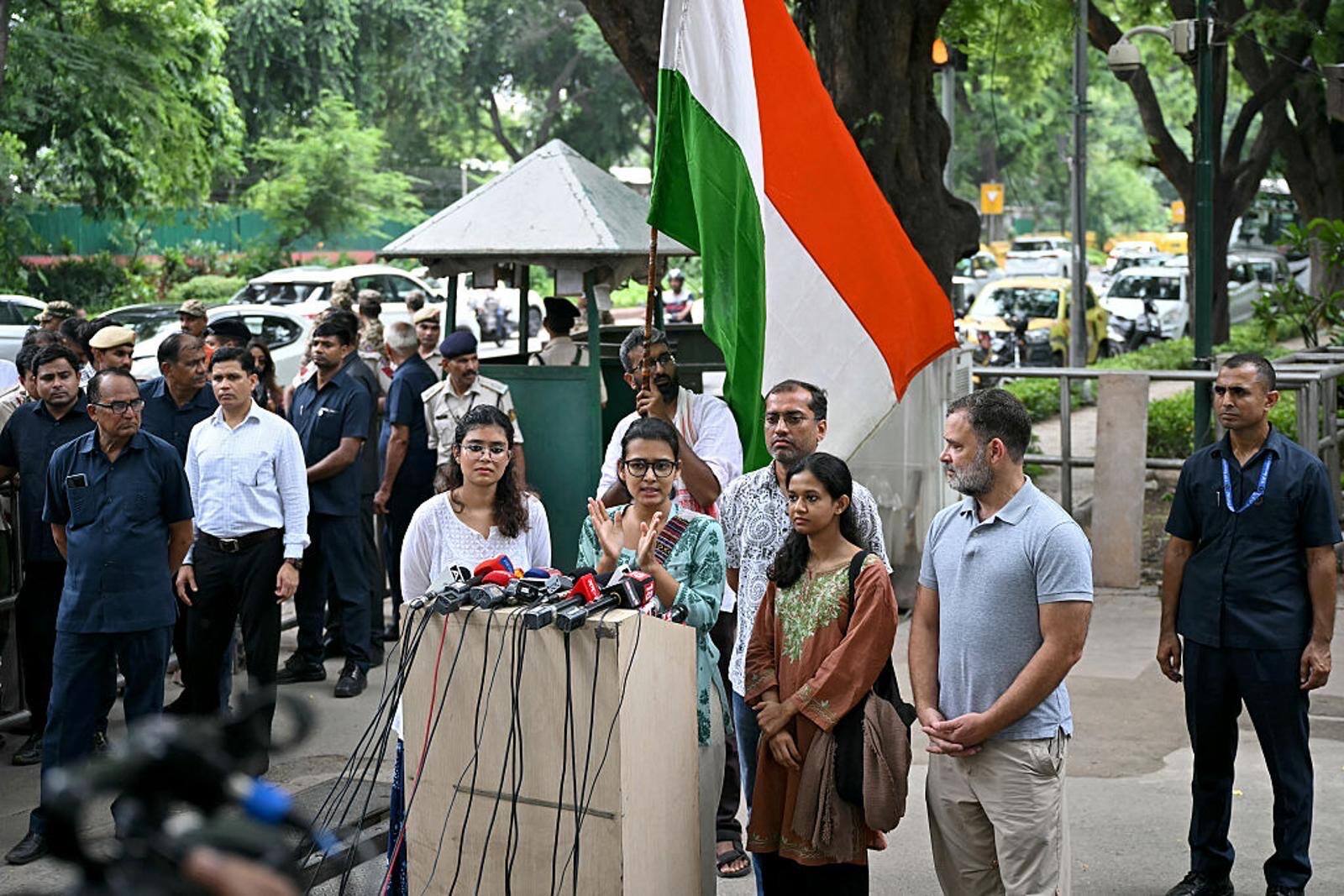
Two influential international outlets this week published long-form analyses that reach the same conclusion from different continents: the Cockroach Janta Party (CJP) protests did not merely force an education minister's resignation — they rewrote the political grammar available to Indian youth, breaking a decade of fear as a governing tool.
In TIME magazine's Ideas section on 29 July, Brown University fellow Yamini Aiyar traces how a judge's slur, a leaked medical exam, and a Boston student's Instagram satire converged to puncture the hegemony of Prime Minister Narendra Modi's government. In openDemocracy on 31 July, journalist Aman Sethi reports from Jantar Mantar that the protests have "defanged the Modi regime's primary tools of governance: fear, alienation and division."
What the analyses argue
Aiyar frames the episode as a generational betrayal of the "logic of Indian aspiration" — work hard, ace the test, land the job, join the middle class. The NEET-UG paper leak in May, affecting more than two million students, exposed that logic as a rigged game. When Chief Justice Surya Kant disparaged unemployed youth as "cockroaches" on 15 May, Abhijeet Dipke, a student in Boston, embraced the insult and created the satirical Cockroach Janta Party on Instagram. Within weeks the page gathered more than 20 million followers. The movement migrated from screens to streets; by 20 July, crowds swelled at Jantar Mantar as educator-activist Sonam Wangchuk and student leader Neha Bora (AISA president) entered their third week of hunger strike demanding Education Minister Dharmendra Pradhan's resignation.
Sethi grounds the same arc in on-the-ground testimony. He interviews Rachna, 21, and Mamta, 23 — daughters of a daily-wage labourer from near Agra — who travelled to Delhi for the first time to camp at Jantar Mantar. "We are going to stay here for as long as it takes," Rachna told openDemocracy. "I told my didi, we'll just sleep here on the streets until the education minister resigns." Twelve hours later, Pradhan was gone.
Both pieces highlight a rhetorical shift that the government's playbook could not absorb. Aiyar describes posters at the protest site reading: "Whenever Modi gets scared, he turns to Hindu-Muslim" and "When Hindus and Muslims stand together, what can the fascist do?" — slogans that previously belonged to Muslim-led anti-CAA protests but now emerged from "a broader base of largely Hindu students" who had once been the BJP's core vote base. Sethi calls this "a new and unexpected solidarity that has defanged the Modi regime's primary tools of governance: fear, alienation and division."
Aiyar notes the government's response — fast-track courts, a tech-czar committee — "holds little promise" because it "neither addresses the core issues nor breaks the ideological yoke that burdens India's education system today." She warns that formal democratic venues — parties, elections, Parliament — are no longer seen as credible by this generation, a condition she attributes partly to the BJP's "institutional capture, financial control and the manipulation of electoral rolls."
Sethi's reporting adds the electoral stakes: Rachna and Mamta sat for the Uttar Pradesh police constable exam (acceptance rate 1%) and found that paper leaked too. The structural joblessness — Aiyar cites 40% of university graduates under 25 unemployed, and 1.7 million salaried jobs created against five million annual graduates between 2004 and 2023 — fuels a cohort for whom exams are the only gateway to dignity.
What we can verify
- TIME published an analysis by Yamini Aiyar on 29 July 2026 arguing that the CJP movement punctured Modi's hegemony, forced Education Minister Dharmendra Pradhan's resignation on 25 July, and exposed structural youth unemployment and education-system failure as the movement's deeper drivers (TIME).
- openDemocracy published a reported essay by Aman Sethi on 31 July 2026, based on interviews with protesters at Jantar Mantar, concluding the movement produced "a new and unexpected solidarity" that defanged fear and division as governing tools (openDemocracy).
- Both sources confirm the sequence: NEET-UG leak (May) → Chief Justice "cockroach" remark (15 May) → CJP Instagram launch → Wangchuk/Bora hunger strike (late June–July) → 20 July "Sansad Chalo" march with police tear gas, pellet guns, batons → Pradhan resignation (25 July) → CJP calls off sit-in "in good faith".
- Aiyar cites the 40% graduate unemployment figure and the 1.7M vs 5M job-creation gap; Sethi reports the UP constable exam's 1% acceptance rate and paper-leak claim. Both are sourced to the authors' reporting.
What remains unverified
- Projections regarding whether the CJP can convert protest momentum into a lasting national organisation or electoral force remain [unverified] speculative analysis by external observers.
- The full extent of post-protest police case withdrawals across states — and whether the "criminal antecedents" caveat reported by DW and Truthout undermines the government's assurance — is not independently audited here.
- Claims that the movement has permanently altered the BJP's core vote base or opened durable democratic space are analytical judgments, not measured outcomes; Aiyar herself writes the "interim" may see "moments when its people can breathe, followed by brutal state repression."
Sources cited
CJP policy: every fact in this article is traceable to a public source. We never publish what we cannot verify.
- ›TIME — How India's Young Faced Down Modi (Yamini Aiyar, 29 July 2026) — https://time.com/article/2026/07/29/india-cockroach-youth-protests-unemployment-modi/
- ›openDemocracy — Cockroaches, Modi and the death of fear (Aman Sethi, 31 July 2026) — https://www.opendemocracy.net/india-modi-cockroach-neet-protests/
Got a tip on this story? Our newsroom follows up on every lead. Reach us via the submission page.