Indian Catholic Church Backs CJP Students After Police Violence, The Tablet Reports
The Tablet reveals Catholic Bishops' Conference of India and church networks distributed aid at Jantar Mantar while condemning baton charges, pellet guns on student protesters.
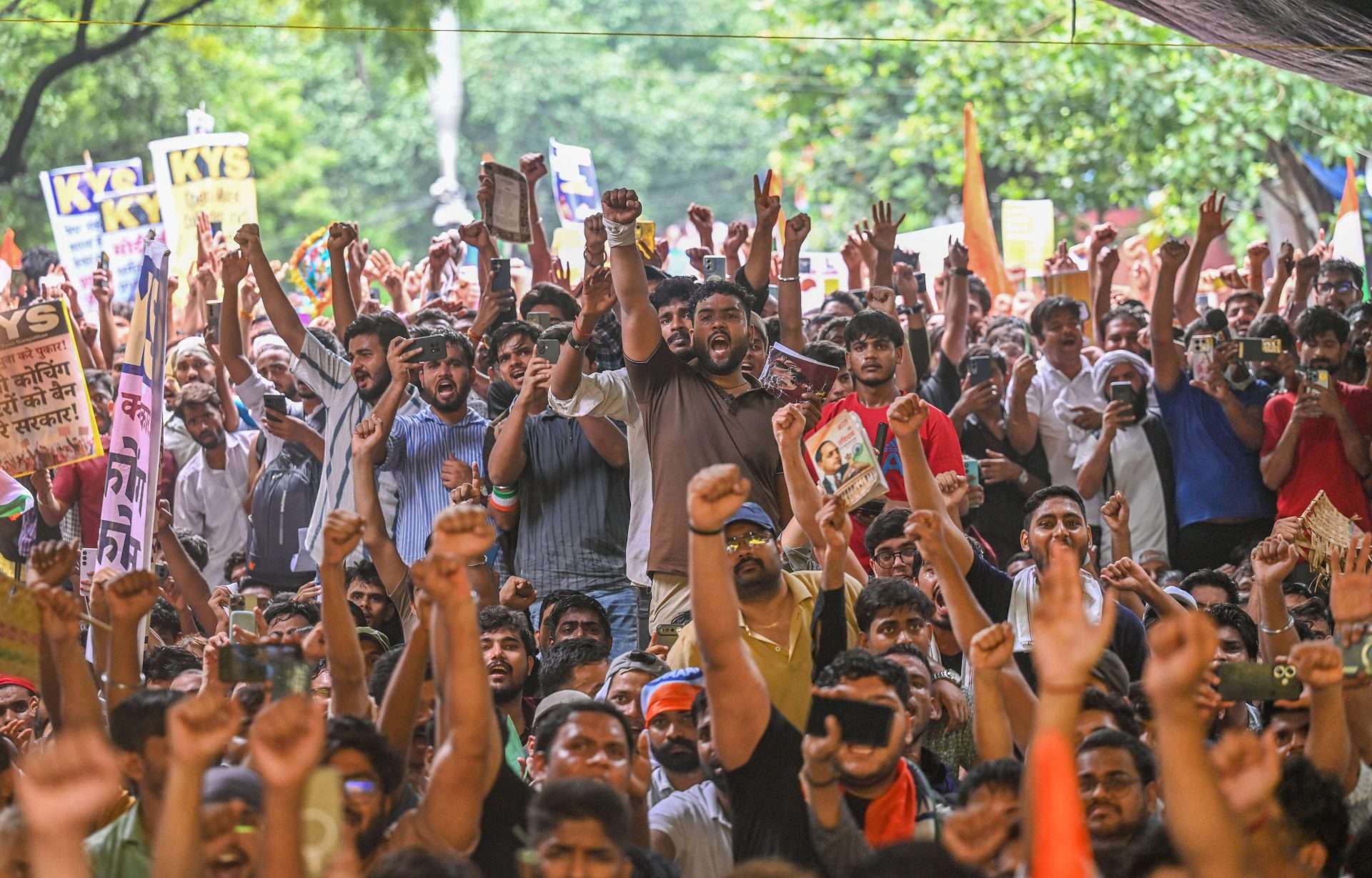
LONDON / NEW DELHI — A Catholic weekly published in London has documented how India's institutional church threw its weight behind the Cockroach Janta Party (CJP) student movement, distributing food and medical aid at the Jantar Mantar protest site while its bishops' conference condemned the "harrowing brutality" of police baton charges, tear gas and pellet-gun rounds fired at demonstrators.
The Tablet, a Catholic international current-affairs journal founded in 1840, published a 30 July dispatch by Rome correspondent Rita Joseph describing a convergence of church networks, opposition politicians and civil-society groups that sustained the weeks-long sit-in at New Delhi's historic observatory. The article places the CJP agitation — triggered by the NEET-UG medical entrance paper leak on 3 May — inside a wider frame of democratic backsliding that foreign editors now compare to the youth-led uprisings that toppled governments in Bangladesh and Sri Lanka.
What we can verify
Church mobilisation on the ground. The Tablet reports that "over the course of the protest, most of India's churches, priests, religious, major opposition political parties, activists and many celebrities turned up to show solidarity." The Catholic Bishops' Conference of India (CBCI) issued a formal statement: "We share your pain, hear your voices, and echo your righteous cry for a transparent and just education system." Fr Suresh Mathew, president of the Indian Catholic Press Association, called it "profoundly disturbing that students who should be preparing for their future are instead being forced to take to the streets to demand justice and accountability."
Police tactics confirmed by multiple outlets. The Tablet's account of "cane charges, water cannon, tear gas and pellet guns" aligns with the BBC's 20 July report ("Police wielding canes used tear gas to disperse crowds… Several demonstrators said they were injured in the cane charges") and the Independent's 21 July profile noting the march on parliament "was met by tear gas and baton charges from the police." Volunteer doctor Gaurish Batra told the BBC he had "treated at least 10 people," including a man with a blood-soaked collar and a woman with a suspected broken leg — both alleging baton injuries. Delhi Police have not responded to BBC requests for comment.
Hunger strike as catalyst. Engineer-activist Sonam Wangchuk began an indefinite fast on 28 June in solidarity with CJP demands. The Tablet notes he was "forcibly removed to a government hospital on 19 July" after 21 days; the following day "tens of thousands of protesters held a rally to march towards parliament, forming one of India's largest anti-government protests in recent years." NPR's 27 July analysis by Šumit Ganguly links Wangchuk's hospitalisation to the surge in turnout that pressured Education Minister Dharmendra Pradhan to resign on 25 July.
Supreme Court interventions. The Tablet records that courts "directed health authorities to check on him" amid concerns for Wangchuk's health. This tracks with Open Magazine's 30 July essay by Siddharth Singh, which reports the Supreme Court ordered the release of all minors detained during the protests and directed preservation of drone, body-camera and CCTV footage while an independent probe into alleged excesses — including pellet-gun use — proceeds.
Digital suppression. The Independent confirms CJP's X (formerly Twitter) account "is currently not visible in India, with people trying to view it being told that it has been withheld 'in response to a legal demand'." The Tablet adds the government "cut off internet connection and shut down metro stations leading to Jantar Mantar to dissuade people from going to the site."
What remains unverified
- The Tablet cites a protester, Rohit Verma, claiming the movement demanded "the resignation of [federal education minister] Manoj Pradhan" — a name discrepancy (the minister is Dharmendra Pradhan). The Independent and BBC consistently name Dharmendra Pradhan; the Rohit Verma quote is uncorroborated.
- Opposition leader Sonia Gandhi's claim of "152 leaks of competitive exam papers in the last 12 years under the BJP government" appears in The Tablet without a primary source link; we have not independently verified the count.
- The Tablet states CJP's Instagram reached "26 million followers"; the Independent (21 July) and BBC (20 July) report ~20.5 million at that time. The 26 million figure may reflect later growth or rounding; we mark it [unverified].
- Open Magazine's characterisation that "anti-social and criminal elements" infiltrated the protests is an editorial assessment, not a documented finding; no police chargesheet or court order citing such infiltration has been publicly released.
Why it matters
Foreign correspondents have largely framed the CJP episode as a Gen Z digital insurgency — memes, slang, Instagram metrics. The Tablet adds a layer domestic outlets have under-reported: the institutional church, historically cautious about partisan politics, treated the student sit-in as a humanitarian and democratic imperative. Food, water, medical kits and overnight shelter were coordinated through parish networks across Delhi, effectively substituting for state services that were withdrawn — metro closures, mobile-internet suspensions, water-cannon deployments.
That ecumenical infrastructure helped the protest survive a month of monsoon heat and police pressure long enough for the Supreme Court to intervene and for Pradhan's resignation to become politically unavoidable. Whether the church's engagement signals a broader shift in Indian civil-society alignments — or remains a one-off response to egregious police tactics — is the question foreign desks are now filing toward Delhi to answer.
Sources
- The Tablet, 30 July 2026 — "Indian Church backs Gen Z after exam leak protests meet police violence" (Rita Joseph)
- The Independent, 21 July 2026 — "What is Cockroach Janta Party and why millions of Indians are proudly calling themselves 'cockroaches'" (Shahana Yasmin)
- Open Magazine, 30 July 2026 — "Aftermath of the Jantar Mantar Student Protests: CJP's Role, Supreme Court Safeguards and India's Escalating Exam Leak Unrest" (Siddharth Singh)
- NPR, 27 July 2026 — "The 'cockroach' in the machine: How Gen Z is rattling South Asia's elites" (Šumit Ganguly)
- BBC News, 20 July 2026 — "Police block thousands of 'cockroach' protesters marching on India's parliament" (Abhik Deb)
Sources cited
CJP policy: every fact in this article is traceable to a public source. We never publish what we cannot verify.
- ›The Tablet — Indian Church backs Gen Z after exam leak protests meet police violence — https://www.thetablet.co.uk/news/indian-church-backs-gen-z-after-exam-leak-protests-meet-police-violence/
- ›The Independent — What is Cockroach Janta Party and why millions of Indians are proudly calling themselves 'cockroaches' — https://www.independent.co.uk/asia/india/cockroach-janta-party-dharmendra-pradhan-cjp-protest-abhijeet-dipke-b3021441.html
- ›Open Magazine — Aftermath of the Jantar Mantar Student Protests: CJP's Role, Supreme Court Safeguards and India's Escalating Exam Leak Unrest — https://openthemagazine.com/india/the-afterlife-of-a-protest
- ›NPR — The 'cockroach' in the machine: How Gen Z is rattling South Asia's elites — https://www.npr.org/2026/07/27/nx-s1-5908567/india-cockroach-movement-gen-z-south-asia
Got a tip on this story? Our newsroom follows up on every lead. Reach us via the submission page.