NPR: A Mother's Grief Fuels India's 'Cockroach' Protests Against Exam Leaks
NPR traces how the suicide of 18-year-old Akanksha Chaturvedi after the NEET paper leak became a catalyst for the Cockroach Janta Party protests that forced India's education minister out.
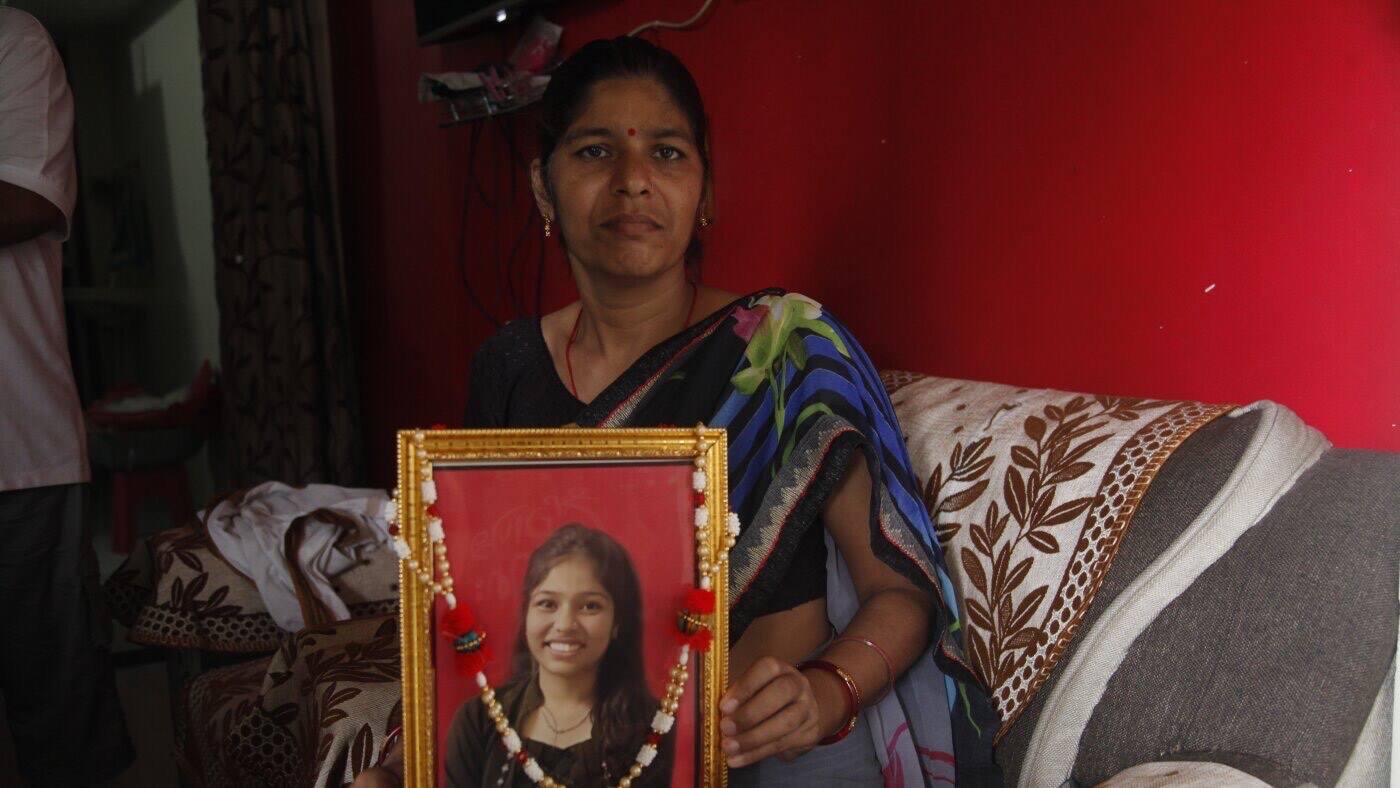
In a cramped walk-up in Nagpur, a framed photograph of 18-year-old Akanksha Chaturvedi sits garlanded with plastic flowers. Her mother, Neelum, strokes the flowers away from her daughter's face — a gesture she repeats daily since May, when Akanksha took her own life after the National Eligibility cum Entrance Test (NEET) medical exam results were cancelled because the paper had been leaked.
"Mummy, Pappa," her suicide note began in curly ballpoint. "I could never find fault in her," Neelum told NPR's Diaa Hadid in a report published 31 July. "Sorry. I have ruined everything."
Akanksha was one of around a dozen students whose suicides Indian media linked to the NEET-UG paper leak. The scandal — in which the questions for an exam taken by more than two million aspirants were allegedly sold and distributed before the test — ignited weeks of protests across Delhi and other cities. The movement, organised under the satirical banner of the Cockroach Janta Party (CJP), forced the resignation of Union Education Minister Dharmendra Pradhan on 25 July.
From exam leak to national movement
The NEET leak was the spark. But as NPR's investigation shows, the fuel was a generation's accumulated frustration with an education system where coaching centres have become a near-mandatory toll gate for any professional future, and where families sink into debt for a chance at a government job.
Akanksha's parents borrowed roughly $900 for her two-year Physics Wallah course — $10 upfront, the rest through a tie-in loan company. Her father, Krishna Kumar, a cook, could not keep up with repayments. "She'd assuage him: 'Don't worry papa, I'm going to pay it all back,'" he told NPR. Akanksha tracked her father's doctor appointments and medicines, promising to become his doctor. When the exam was cancelled, she stayed in her room for days. Then she died.
"My daughter is dead," Kumar said. "She killed herself over an exam leak."
What we can verify
- Akanksha Chaturvedi's suicide: NPR confirmed the 18-year-old's death in May 2026 after the NEET-UG results were cancelled. Her parents showed reporters the suicide note and described the family's coaching-centre debt.
- Scale of student suicides: NPR cites The Hindu's report that student suicides in India rose from 8,068 in 2014 to 14,488 in 2024, with roughly one-fifth occurring after exam failures. The NEET leak added around a dozen more deaths in 2026, per Indian media coverage NPR references.
- Coaching-centre economy: Maheshwer Peri, who runs a career-guidance firm, told NPR the coaching industry is "a huge industry" with "tens of millions" of students but no regulatory data on enrolments or outcomes. Pradip Saha, author on education policy, noted coaching centres sometimes have tie-ins with loan companies — a conflict of interest when "parents will pay anything."
- CJP protests and Pradhan's resignation: The CJP sit-in at Jantar Mantar began in early June 2026, drawing hundreds of students. It gained momentum after police removed hunger-striking activist Sonam Wangchuk, and again after security forces used pellet guns on protesters on 20 July. Pradhan resigned on 25 July; the government agreed to compensate families of students who died and to form a reform committee.
- Chief Justice's 'cockroach' remark: The movement's name derives from Chief Justice Surya Kant's reported comment likening unemployed youth to "cockroaches" and "parasites." The justice said he was misquoted, but the phrase galvanised outrage in a country where 67% of graduates were unemployed in 2023.
What remains unverified
- Government compensation to families: Akanksha's mother told NPR no official had contacted them to discuss compensation or offer condolences. A BJP municipal official claimed he tried meeting the family "two or three times" without response. Neither claim has been independently confirmed.
- Exact number of NEET-linked suicides: Indian media reported "around a dozen" student suicides after the May cancellation. NPR does not cite a primary government or coroner dataset; the figure remains an aggregate of media reports.
- Physics Wallah loan tie-in details: The franchise spokesperson told NPR the family paid $10 upfront and took a loan for the remainder through a partner company. The loan terms and the company's identity were not disclosed in the report.
- Whether reforms will materialise: Political scientist Šumit Ganguly told NPR he doubts the government's reform committee will produce change: "Lots of people stand to benefit from the vast bureaucracy that administers these things... including the government itself, which earns an 18% tax on payments to coaching centres."
A movement with parents behind it
The Guardian's letters page on 2 August carried a note from Bhaskar Mani arguing that the CJP protests were "not just supported by young, restless or unemployed people. It was wholeheartedly supported by their parents and wider community." Another letter, from Nand Lal Rathore, said mainstream media "suppressed" the protests and "distorted" them to suggest violence.
That cross-generational backing distinguishes the CJP episode from earlier Indian student agitations. The coaching-centre debt burden — shouldered by parents — turns exam failure into a family crisis, not just an individual one.
"We are little people, insects," Akanksha's mother said. "Why would the government come to ask about an insect?"
The phrase echoes the Chief Justice's slur — and the Cockroach Janta Party's reclaiming of it. For the families in Nagpur and the protesters at Jantar Mantar, the question now is whether the minister's resignation and the promised reform committee will yield anything more than another commission report gathering dust.
Sources cited
CJP policy: every fact in this article is traceable to a public source. We never publish what we cannot verify.
- ›NPR — From a mother's grief to a nation's fury: How an exam leak became a political storm — https://www.npr.org/2026/07/31/nx-s1-5911927/trying-to-understand-students-deaths-and-protests-in-india
- ›The Guardian — India's gen Z have discovered the power of collective action (Letters) — https://www.theguardian.com/world/2026/aug/02/indias-gen-z-have-discovered-the-power-of-collective-action
- ›Al Jazeera — India cracks down on protesters accused of 'abusing' Modi — https://www.aljazeera.com/video/newsfeed/2026/8/1/india-cracks-down-on-protesters-accused-of-abusing-modi
- ›BBC News — Why tech alone won't stop exam paper leaks — https://www.bbc.com/news/articles/c1m1gz1nx45o
Got a tip on this story? Our newsroom follows up on every lead. Reach us via the submission page.