Guardian: Gen Z Exposed India's Prime-Time Propaganda Machine
The Guardian's Niha Masih says CJP protesters at Jantar Mantar took on India's godi television media, not just Modi, flipping the prime-time script.
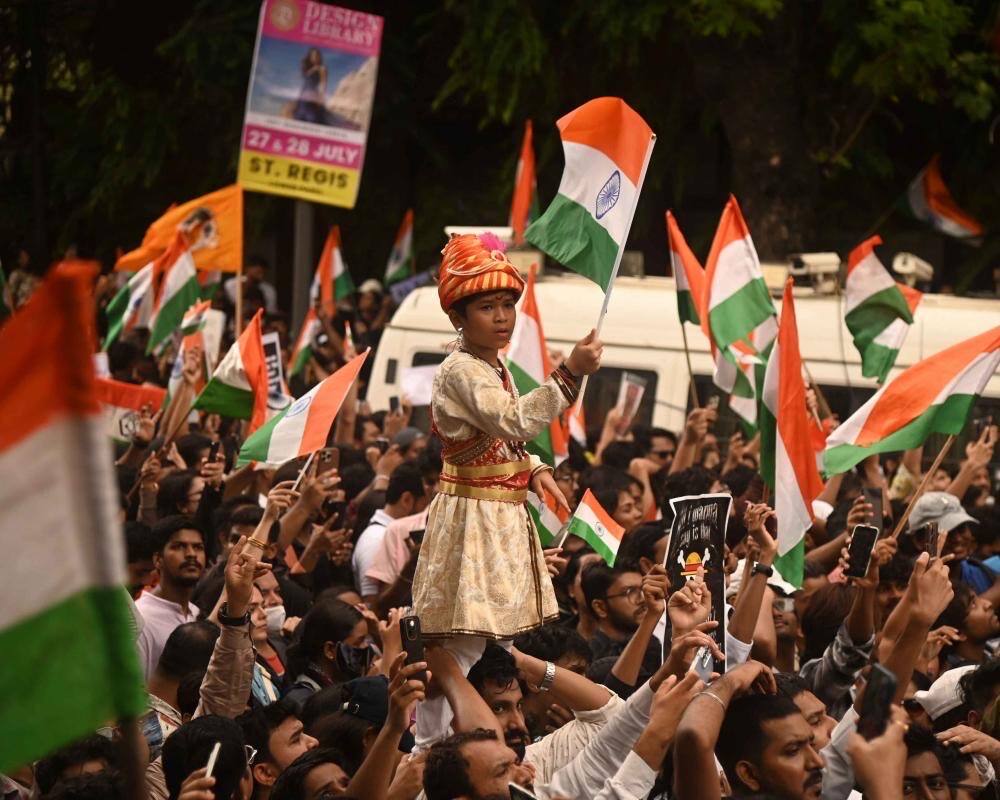
When Cockroach Janta Party protesters filled central Delhi this July, The Guardian's Niha Masih argues they were not only challenging Prime Minister Narendra Modi's government. They also walked straight into a fight with another institution: India's mainstream television news.
In her 4 August "This is India" column, Masih frames the media clash as the story inside the story. At Jantar Mantar, students chanted about examination leaks and justice — and aimed expletives at political leaders, communal politics, and what they called "godi" media, the lapdog press. Reporters from big channels were heckled, chased, and beaten.
Ground truth vs prime time
The anger, Masih writes, grew from a simple gap: what protesters saw and felt on the street was not what viewers got on television. Social media filled that gap. For some, the contrast recalled George Orwell's Nineteen Eighty-Four — a public told to distrust its own eyes and ears.
On 20 July the movement marched toward Parliament, demanding Education Minister Dharmendra Pradhan resign over the NEET paper-leak scandal. Thousands reached the capital. Police answered with teargas, pellet guns, and batons. Masih describes teargas fired into a crowd, then another volley from the opposite direction as people ran for cover.
Seventeen-year-old Deeksha Mishra told the Guardian's south Asia correspondent Hannah Ellis-Petersen: "The police beat us badly. Some had blood flowing down their skulls and noses broken." The movement's early count put wounded protesters at about 150.
Television framed the same day as mere "clashes." NDTV, Masih notes, used the word "agitators" and asked whether streets had been "mobilised by 'mobs'." Times Now cast protesters as anarchists and stressed police injuries. Republic teased an "explosive exposé" and invited viewers to call in about "anarchy," while floating a U.S. embassy security advisory — issued before the march — as a hint of foreign hand. ANI, a major video feeder for Indian channels, did not share posts on 20 July about police action or protester injuries, according to an Alt News analysis cited by the Guardian.
"Godi media" after twelve years
Masih ties that coverage to a longer shift across Modi's twelve years in office: prime-time shows treated less as places to question power than as extensions of the ruling agenda. Nightly debates targeted the opposition, rights activists, critics, minorities, and academics. In that climate, veteran journalist Ravish Kumar's phrase "godi media" entered everyday speech.
Protesters flipped the script with tools television could not match. Gen Z creators documented the street with humour and irreverence that spread faster than studio packages. One viral clip showed a boy detained at a Mumbai demo filming an officer who threatened to plant drugs on detainees — then switching to selfie mode, sniggering, and sticking out his tongue. Indian media later reported the state government suspended the officer and ordered an inquiry. Another clip showed a man opening a police-van latch as it moved, helping free detainees.
After public pressure forced Pradhan out, even some government supporters turned on TV news. Filmmaker Vivek Agnihotri wrote that television had lost public trust and that social-media controls would not fix it. "No matter what you do, you can't manufacture authenticity," he wrote, per the Guardian.
Who still watches the box
For a generation that already gets news from phones, bypassing prime time is easy. Masih says the visible "godi media" backlash during the Cockroach protests may only speed television's slide as the main arbiter of national narrative.
Author Ria Chopra, 27, whose book Logged Out tracks how the internet shaped India's Gen Z, told Masih the shift is creeping past young viewers. She described a friend's boomer father watching nearly an hour of independent crackdown footage from creator Samdish Bhatia and cameraperson Parth Nainwal on YouTube — partly because "kids who are going to the protests" make the story hard to ignore at the doorstep. Chopra called the moment a reckoning and said audiences are gravitating toward "small, independent citizen reporters who are on the ground."
Same wound, other desks
The Guardian piece lands beside other foreign reporting on the media trust gap. AFP, carried by UCA News on 6 August, described a "deepening crisis of trust" toward traditional broadcasters; protest signs branded channels "India's worst enemies," and crews in Delhi, Mumbai, and Patna faced physical hostility. Germany's Peace Research Institute Frankfurt (PRIF), in its 5 August study of the Delhi protests, likewise tied the movement's scale to anger over exam integrity, internet shutdowns, and a press many students no longer believe.
Masih's column is less a street timeline than a media autopsy: CJP did not only force a minister out. It showed, on camera and on timelines, how far prime-time India had drifted from the crowd it claimed to cover.
Related: The Guardian (4 Aug) on BJP's Bankipur byelection loss after the protests; CJP News digest of PRIF and UCA News on the media-trust crisis.
[Source: The Guardian, Niha Masih, "How gen Z exposed India's prime-time propaganda machine," 4 August 2026; UCA News / AFP, 6 August 2026; PRIF Blog, 5 August 2026]
Sources cited
CJP policy: every fact in this article is traceable to a public source. We never publish what we cannot verify.
- ›The Guardian — How gen Z exposed India's prime-time propaganda machine (Niha Masih) — https://www.theguardian.com/world/2026/aug/03/this-is-india-niha-masih-cockroach-protest-narendra-modi
- ›UCA News / AFP — India youth protests highlight mistrust in 'lapdog' media — https://www.ucanews.com/amp/india-youth-protests-highlight-mistrust-in-lapdog-media/114653
- ›PRIF Blog — Student Protests in Delhi and India 2026: Gen-Z's Frustration and Fight for Reforms — https://blog.prif.org/2026/08/05/student-protests-in-delhi-and-india-2026-gen-zs-frustration-and-fight-for-reforms/
Got a tip on this story? Our newsroom follows up on every lead. Reach us via the submission page.