
Guardian, Al Jazeera, Japan Times: Global press frames CJP protests as crack in Modi's strongman image
International outlets from London to Doha to Tokyo describe the Cockroach Janta Party protests as the first mass movement in over a decade to force a ministerial resignation and dent the prime minister's carefully cultivated strongman persona.
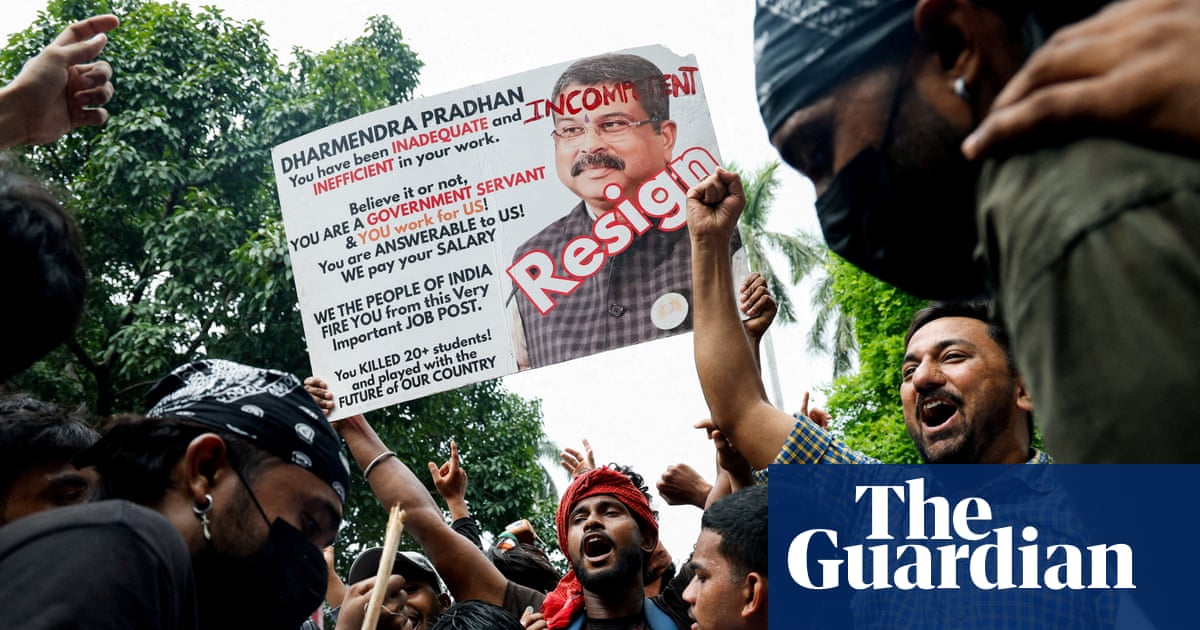
LONDON / DOHA / TOKYO — International newspapers and broadcasters this week converged on a single assessment of India's Cockroach Janta Party (CJP) protests: a satirical student movement that began over a leaked medical-entrance exam paper has delivered the first real dent to Prime Minister Narendra Modi's carefully curated strongman image in more than twelve years of rule.
The Guardian's India correspondent, writing from New Delhi on 26 July, described Pradhan's resignation as "the remarkable humbling of a government that has ruled with almost untouchable impunity since 2014." The paper noted that even the night before the resignation, Modi had appeared confident the protests would "do little to rattle his government," posting an Instagram reel thanking protesters for their "thoughtful suggestions." Less than twenty-four hours later, the education minister was gone.
"What began as a satirical protest when the chief justice of India compared the country's unemployed youth to cockroaches has damaged prime minister Modi's image as a 'strongman' leader and loosened his grip over the media," The Guardian Weekly summarized in its 31 July edition, citing Delhi-based writer Mukul Kesavan on how the movement differs from the 2019-20 Jamia Millia Islamia protests.
Al Jazeera, in a 29 July explainer by Sarah Shamim, reported the government's response as a "measured crackdown" paired with an attempt to woo youth. The Doha-based outlet confirmed that Supreme Court orders on Tuesday secured the release of all under-18 detainees, and that BJP-ruled states — West Bengal, Maharashtra, Bihar, Assam, and Delhi — have announced withdrawal of cases against protesters. The network also documented allegations of baton charges, tear gas, pellet guns, and a suspended Bihar police officer who pointed an AK-47 at demonstrators in Siwan, firing at least three rounds in the air.
The Japan Times framed the episode as a generational stress test for Modi. "'We are not learning anything': India's Gen Z rage is a test for Modi," read the 30 July headline, capturing student frustration over years of exam preparation rendered meaningless by repeated paper leaks and more than a dozen reported suicides linked to the NEET-UG controversy.
The Washington Post's opinion page went further: "India's Gen Z just made Modi blink," arguing the protests exposed the fragility of a leader who has "rarely bowed to popular pressure." The Commonwealth Round Table in London ran a companion piece headlined "Young Indian 'cockroaches' reclaim democratic space," situating the movement within a broader reclamation of dissent.
What we can verify:
- Education Minister Dharmendra Pradhan resigned on 26 July 2026 after weeks of CJP-led protests over the NEET-UG paper leak.
- The Guardian (26 July) and Al Jazeera (29 July) both confirm the resignation and its symbolic weight for Modi's strongman image.
- India's Supreme Court ordered the release of all minors arrested during the protests; multiple BJP-ruled states subsequently announced case withdrawals.
- Al Jazeera reports police use of batons, tear gas, pellet guns, and one suspended officer firing an AK-47 in Bihar's Siwan district — details not independently confirmed by a second international outlet.
- The Japan Times (30 July) and Washington Post (29 July) characterize the protests as a generational challenge to Modi's authority.
What remains unverified:
- Exact protester headcounts across cities — international outlets cite "hundreds" to "thousands" without a single corroborated figure.
- The precise number of student suicides linked to the NEET leak — Indian media report "more than a dozen"; international outlets repeat the claim without independent verification.
- Claims of AI-powered surveillance targeting protesters — mentioned by Al Jazeera citing local reports; no primary technical evidence presented.
- Whether the movement will sustain beyond the ministerial resignation — analysts quoted across outlets are divided.
The convergence of London, Doha, and Tokyo coverage on a single narrative — a student protest forcing a minister out and cracking a strongman's armor — marks a notable moment in how global media reads India's democratic trajectory in 2026.
Sources cited
CJP policy: every fact in this article is traceable to a public source. We never publish what we cannot verify.
- ›The Guardian — https://www.theguardian.com/world/2026/jul/26/india-cockroach-protest-victory-signals-trouble-ahead-for-narendra-modi
- ›The Guardian (Weekly) — https://www.theguardian.com/news/2026/jul/29/cockroach-protests-rattle-modi-inside-the-31-july-guardian-weekly
- ›Al Jazeera — https://www.aljazeera.com/news/2026/7/29/how-has-the-indian-government-responded-to-cockroach-protests
- ›The Japan Times — https://www.japantimes.co.jp/news/2026/07/30/asia-pacific/politics/india-gen-z-modi-test/
Got a tip on this story? Our newsroom follows up on every lead. Reach us via the submission page.