
Foreign Policy: India's Political Atmosphere Has Changed
Yale lecturer Sushant Singh tells Foreign Policy that CJP punctured Modi's aura — and that answering with pure repression could backfire into a longer crisis.
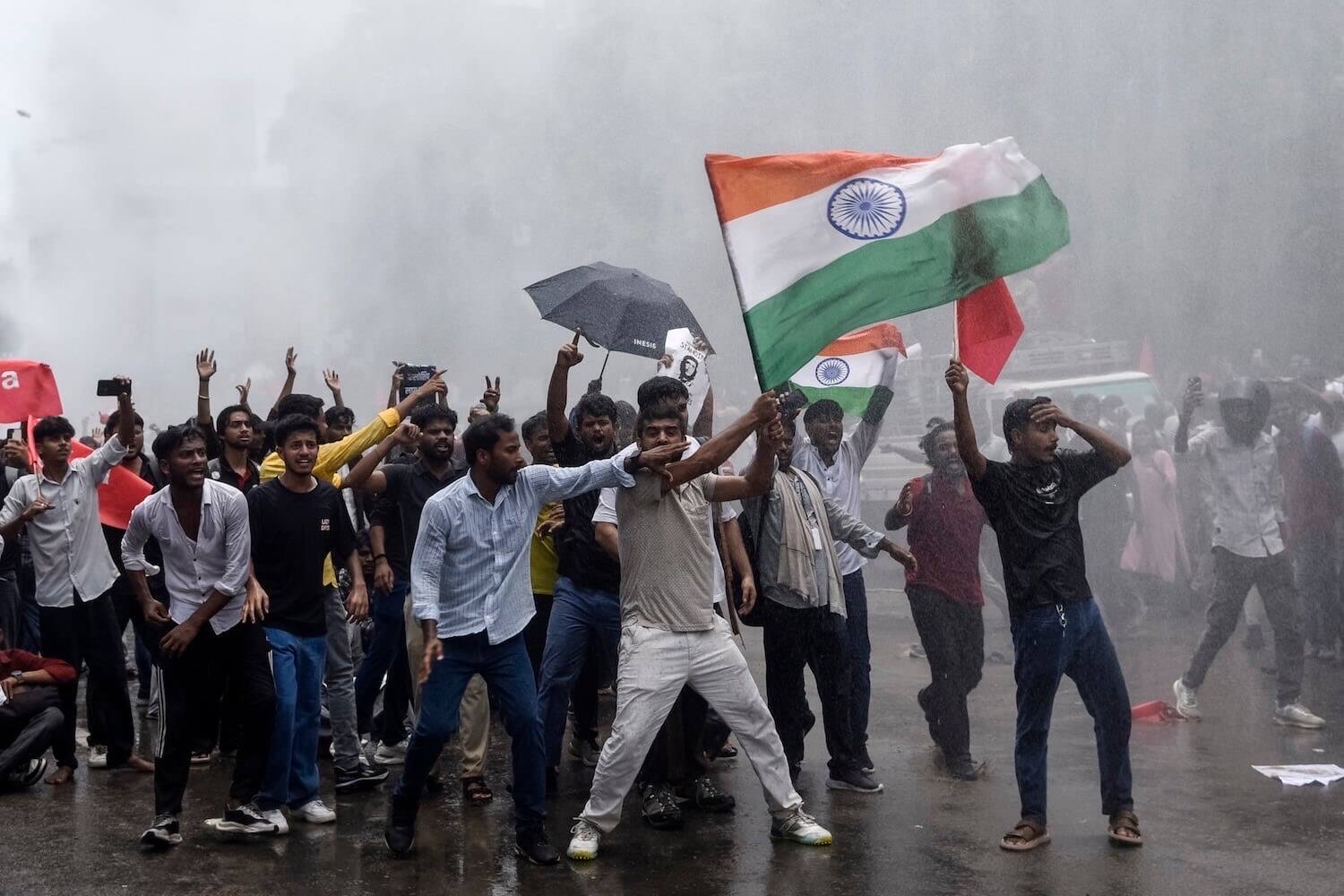
WASHINGTON / NEW DELHI — Foreign Policy’s 4 August analysis by Sushant Singh — Yale lecturer in South Asian studies and consulting editor at The Caravan — lands a blunt headline claim: after the Cockroach Janta Party forced Education Minister Dharmendra Pradhan out on 25 July, “India’s political atmosphere has changed.” The subhed is the policy warning: if Prime Minister Narendra Modi answers the protesters with deeper repression, “it could backfire.”
What Singh argues from the record
Coalescence, not another silo. Opening with V.S. Naipaul’s old “million mutinies” image of India as endlessly fragmented, Singh says the Gen Z revolt showed a splintered society can still fuse — this time against the Modi government, under a satirical CJP banner born from a chief justice’s derogatory “cockroach” remark and then locked onto leaked exam papers and a parliament-bound march.
Why this mobilisation differed. India has seen larger crowds, Singh grants. CJP’s edge was age, organisation, tone and digital tissue: phones made police batons and pellet guns part of the story in real time, so the crackdown itself widened the grievance. Amnesty’s call for investigation of the Delhi force is among the links under that claim. Fear of the regime, he writes, began to erode when demonstrators reoccupied sites after police action.
Structural drivers, not only exam rage. Singh cites Gen Z as roughly one-quarter of India’s population; points to reporting that nearly 40 percent of graduates under 25 are unemployed (Azim Premji-linked figures circulating in Indian media); and uses the stark jobs ratio often quoted in the debate — on the order of 300 million young people against roughly 15 million “meaningful” salaried jobs with contracts and social security. Gig work and stagnant wages, he argues, turned market anger into anger at a prime minister who personalised every success for a decade.
Aura puncture. Protest speech was “sharp, mocking, crude” and often aimed at Modi personally — including the widely chanted neem-leaf slogan that foreign desks have struggled to print politely. Singh’s point is political psychology: a leader insulated by charisma and propaganda got treated as attackable. That matters in a system V-Dem and other watchdogs classify on the electoral-autocracy spectrum.
Opposition opportunity — and trap. Congress and allies, he says, were “agile enough to fuse” street pressure with parliamentary tactics and mostly amplified rather than captured the movement. Translating unrest into a 2029-facing mandate is a harder test. Institutional decay — courts, Parliament, statutory bodies, Election Commission — means youth hit the street because formal grievance channels feel broken; that distrust can stain the opposition too.
South Asian pattern. Nepal, Bangladesh, Sri Lanka and now India sit in one churn: economic strain, weak institutions, polarisation, digitally fluent youth less patient with elite self-dealing. These are tests of legitimacy, Singh writes, not isolated tantrums.
Two paths. Accommodation could rejuvenate democratic pressure and show citizens they can still mock power without being crushed. The darker path — “violent retaliation,” thicker digital authoritarianism — may buy short-term order while deepening the conditions that produced CJP. A fresh economic catalyst, he warns, could reassemble decentralised networks “faster and with greater anger.”
What remains unverified
This is analysis, not a news wire. Job ratios and graduate-unemployment percentages depend on definition and survey wave; cite the underlying Azim Premji / PLFS tables before treating any single number as courtroom fact. V-Dem’s regime classification is a research coding, not an Indian legal status. Claims about the BJP “propaganda machine’s” limits against “digital natives” are interpretive. Predictions about 2029 or irreversible fracture are scenario language, not forecasts with stated base rates.
Why it matters for CJP
FP is where foreign-policy professionals and diaspora elites actually argue India. Singh’s piece does two things CJP needs on the record: (1) treats Pradhan’s exit as proof that street-plus-phone pressure can still move a high cabinet seat, and (2) warns that a pure security response is strategically self-harming. For readers who only saw memes, this is the sober version — Naipaul to pellet guns to succession politics — written by a former Indian Army officer who now teaches the region at Yale.
Sources cited
CJP policy: every fact in this article is traceable to a public source. We never publish what we cannot verify.
- ›Foreign Policy — India’s Political Atmosphere Has Changed (Sushant Singh) — https://foreignpolicy.com/2026/08/04/india-cockroach-protests-modi-politics-change/
- ›Foreign Policy — How Gen Z ‘Cockroaches’ Beat Modi at His Own Game (Rishi Iyengar) — https://foreignpolicy.com/2026/07/30/cockroach-janta-party-modi-social-media-gen-z-india-instagram/
- ›Amnesty International UK — Delhi police crackdown on peaceful protesters must be investigated — https://www.amnesty.org.uk/latest/india-delhi-police-crackdown-on-peaceful-protesters-demanding-exam-justice-must-be-investigated/
- ›V-Dem Institute — Democracy Report 2026 — https://www.v-dem.net/documents/75/V-Dem_Institute_Democracy_Report_2026_lowres.pdf
Got a tip on this story? Our newsroom follows up on every lead. Reach us via the submission page.