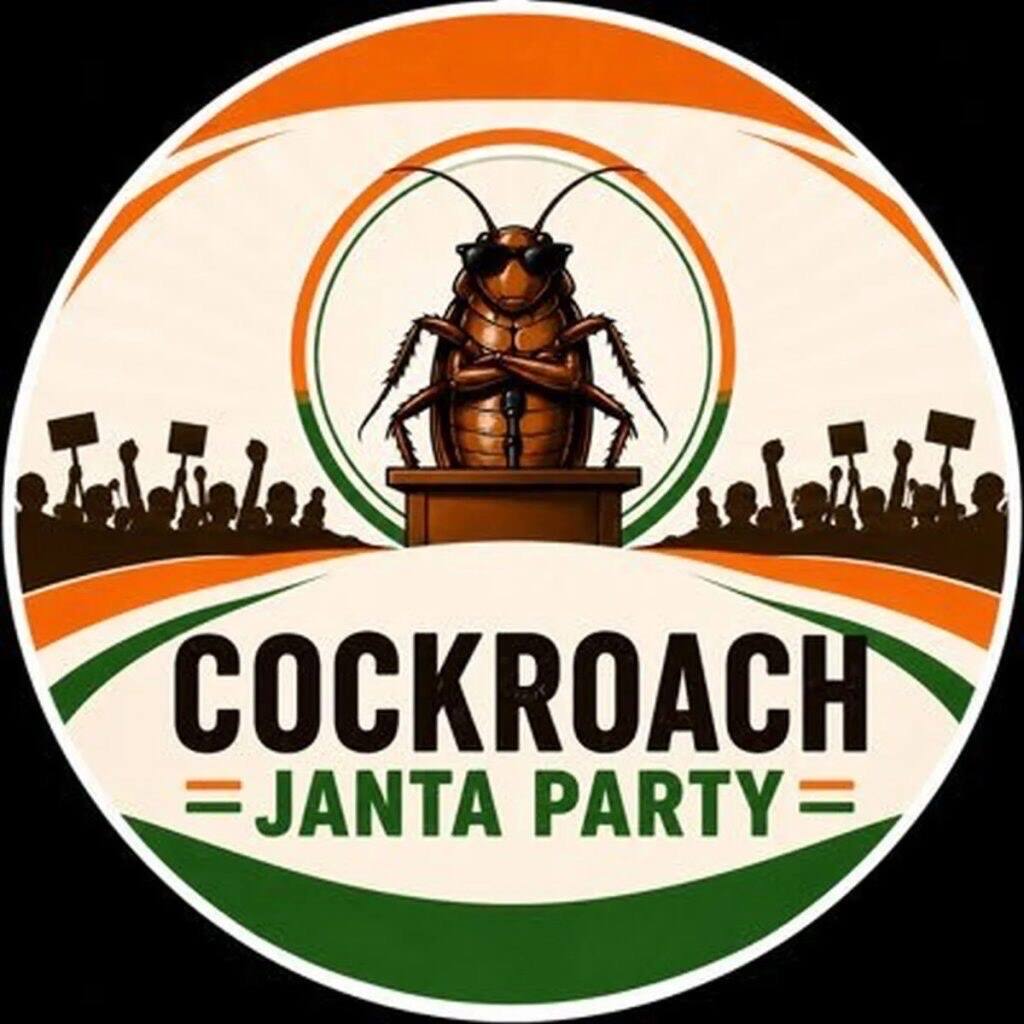
DW: India's Gen Z Protest Enters New Online Battle Over CJP Legacy
Deutsche Welle reports the Cockroach Janta Party's physical occupation of Jantar Mantar has ended, but a fierce digital contest over the movement's legacy is intensifying across Instagram and meme culture, with the BJP mounting a coordinated counternarrative.
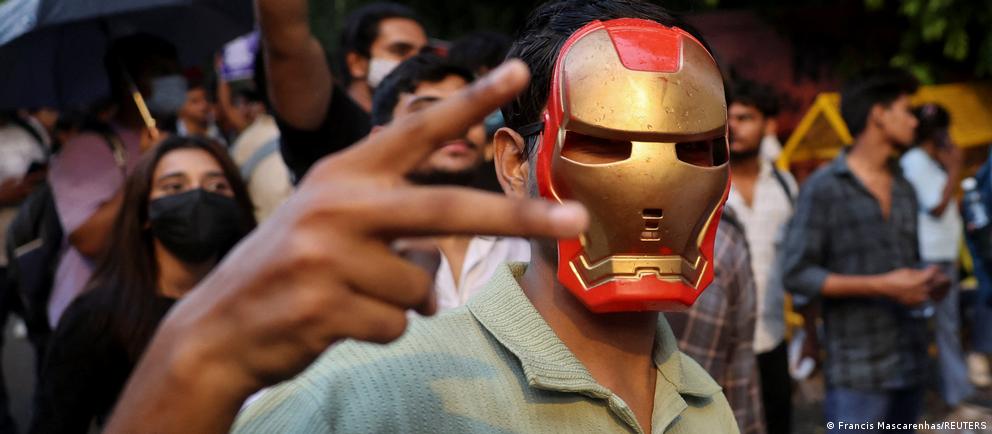
NEW DELHI — The tents at Jantar Mantar came down weeks ago. The barricades have been welded shut. But the Cockroach Janta Party's 36-day campaign — which began as satirical pushback against exam leaks and swelled into a generational revolt over jobs, education, and political voice — has migrated to terrain the establishment finds harder to police: Instagram reels, meme pages, and the algorithmic currents that now shape Indian political discourse.
Deutsche Welle, reporting from New Delhi on 5 August, describes a "fight over the legacy" of India's first Gen Z–led protest movement. The physical confrontation has given way to a digital one, with the ruling Bharatiya Janata Party (BJP) and the decentralised CJP trading competing narratives about what the protests meant, who won, and what comes next.
The truce that wasn't
On 25 July, Education Minister Dharmendra Pradhan resigned — the day after Ladakh activist Sonam Wangchuk ended a 26-day hunger strike that had become the movement's moral centre. The government announced fast-track courts for paper-leak cases, appointed tech billionaire Nandan Nilekani to lead examination reform, and promised compensation to families of students who died by suicide. A joint press conference showed ministers and CJP leaders shaking hands.
DW's Murali Krishnan reports the amity was surface-deep. "The authorities and the CJP are now battling to shape how India's first Gen Z-led protest will be remembered," he writes. The BJP frames Pradhan's exit as proof of government accountability. The CJP calls it a concession extracted by sustained public pressure.
The BJP's digital counternarrative
According to DW, the BJP has mounted what observers describe as a coordinated online campaign to reframe the movement. MPs Bansuri Swaraj and Sambit Patra shared videos of protesters allegedly chanting abusive slogans against Prime Minister Narendra Modi and his late mother. Modi himself said he forgave those responsible. Party president J. P. Nadda and Pradhan argued that "anti-national forces" and opposition parties had hijacked genuine student grievances.
BJP spokesperson Shazia Ilmi told DW the movement's digital fluency should have precluded "crude abuse." She said: "A generation capable of reinventing political communication through memes and satire should not have fallen back on crude abuse."
The Associated Press, in a 4 August dispatch, corroborates this pattern. AP's Sheikh Saaliq and Shonal Ganguly report the BJP's response revealed a generational disconnect: the party's digital strategy, built for the WhatsApp era of top-down broadcast, struggled to parse Instagram's grammar of irony, personal storytelling, and virality.
The meme war continues
CJP supporters have answered not with press releases but with a flood of parody reels, remix videos, and memes mocking the BJP's attempts to appear youthful — including a midnight selfie video from Modi on 26 July acknowledging student "pain" that DW reports was met with a wall of ridicule. The top comment: "We ain't friends."
Apar Gupta, founding director of the Internet Freedom Foundation, told DW the Cockroach movement exposed a structural shift. The BJP's digital strategy was designed for WhatsApp — controllable, hierarchical. Instagram rewards authenticity and allows Gen Z creators to set debate terms before official narratives catch up.
"Gen Z may have won the cultural conversation through reels, memes and satire," Gupta said, "but the state still retains institutional power through takedown requests, digital surveillance and investigations."
The BBC, in a 5 August interview with Wangchuk, captures the same dynamic. Wangchuk told the BBC the protests weakened Modi "terribly" — not electorally, but by breaking a generational habit of deference. "They don't have to take everything lying down," he said. "They now have confidence they can change things if they want to."
What we can verify
- DW published the analysis on 5 August 2026 under the headline "India's Gen Z protest enters a new online battle," reporting from New Delhi by Murali Krishnan (DW).
- Education Minister Dharmendra Pradhan resigned on 25 July 2026, the day after Sonam Wangchuk ended his 26-day fast (DW; BBC; AP).
- BJP MPs shared videos of alleged anti-Modi slogans; Modi said he forgave the protesters; Nadda and Pradhan blamed "anti-national forces" (DW; AP).
- BJP spokesperson Shazia Ilmi told DW the movement's digital fluency should have precluded "crude abuse" (DW).
- Apar Gupta (Internet Freedom Foundation) told DW the BJP's digital strategy was built for the WhatsApp era and struggles with Instagram's ecosystem (DW).
- Sonam Wangchuk told BBC the protests weakened Modi "terribly" by breaking generational deference (BBC).
- NEET-UG paper leak affected 2.2 million candidates; at least 21 student suicides reported in Indian media (BBC; AP).
- Pellet-gun use on 20 July confirmed by independent experts — Philip Boyce (UK ballistics) and NR Jenzen-Jones (Armament Research Services) (BBC).
What remains unverified
- Whether the BJP's online campaign was centrally coordinated or organically amplified — DW cites "observers" and Ilmi's comments; no internal party communications or platform transparency reports accessed [unverified].
- Scale and demographic reach of the CJP's meme counter-campaign — visible on Instagram but no independent analytics published [unverified].
- Whether Modi's political standing has been measurably weakened in polling terms — Wangchuk's "terribly" and analysts' assessments are qualitative; no post-protest polling data published [unverified].
- Long-term electoral impact of the Gen Z disconnect — the 2024 election saw the BJP lose its parliamentary majority; whether this accelerates, stabilises, or reverses before the next national election is [unverified].
- Whether Nilekani's examination reform committee will produce structural change — announced; composition and mandate public; outcomes unknown [unverified].
- Exact number of pellet injuries on 20 July — hospital sources cite multiple eye injuries; no official tally released [unverified].
The streets are quiet. The hashtags are not. What began as a cockroach emoji beside a prime minister's face became a 36-day occupation, a minister's resignation, and now a battle over memory — fought in the grammar of irony that the establishment still cannot speak. As one protester told the Guardian in July: "We are not waiting for permission to speak. We are speaking. The problem is they don't understand the language."
The DW analysis suggests this language — memes, reels, remix culture — is not a sideshow. It is the main event. And the establishment's inability to parse it may be the most significant political development of the summer.
Sources cited
CJP policy: every fact in this article is traceable to a public source. We never publish what we cannot verify.
- ›Deutsche Welle — India's Gen Z protest enters a new online battle — https://www.dw.com/en/india-s-gen-z-protest-enters-a-new-online-battle/a-78253169
- ›BBC News — Youth protests have weakened Modi, Indian activist who went on hunger strike tells BBC — https://www.bbc.com/news/articles/cn7nkyr1j7ro
- ›Associated Press — Protesters in India secure rare victory with minister's resignation — https://apnews.com/article/india-cockroach-protests-modi-government-4358744e9d890b92ffdd2477bbd99e8a
Got a tip on this story? Our newsroom follows up on every lead. Reach us via the submission page.