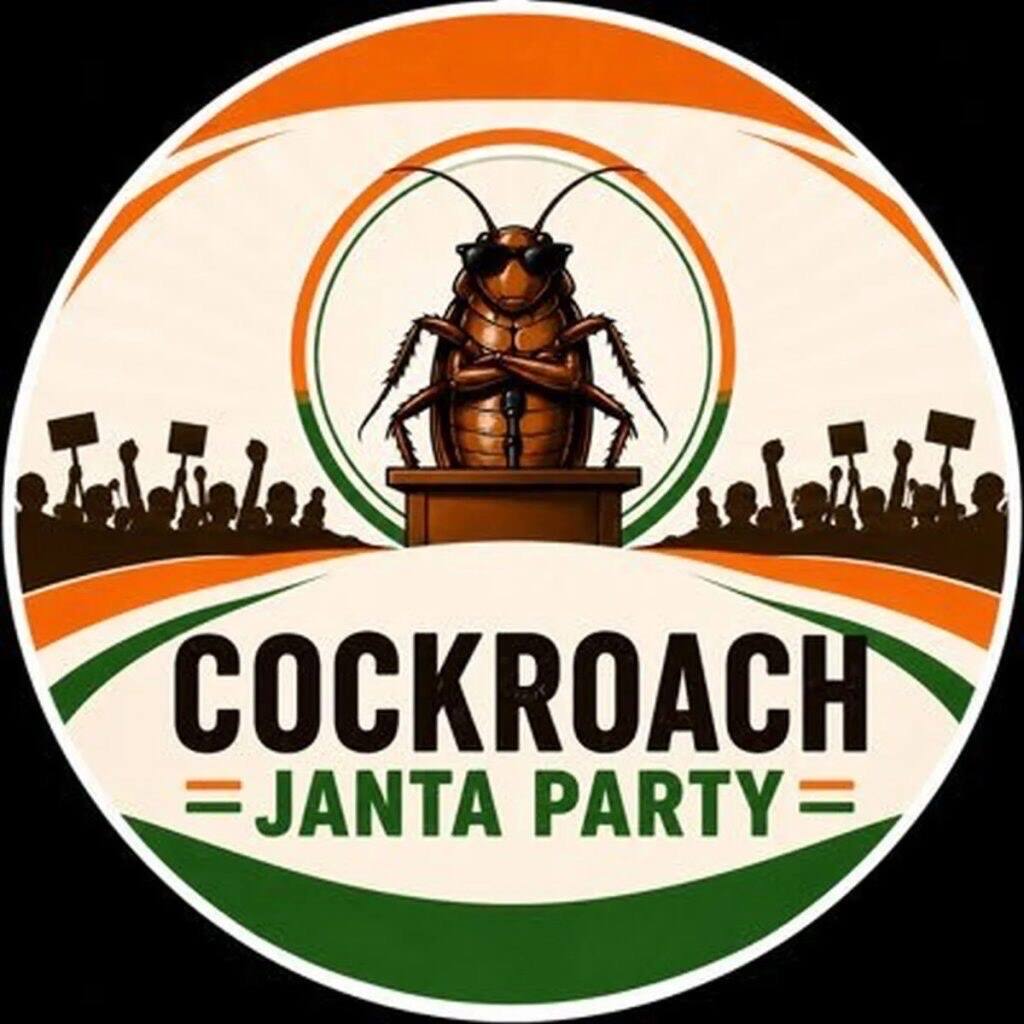
Democracy Now: Roy Frames CJP as 'Cockroach Democracy'
Democracy Now airs Arundhati Roy on Cockroach Janta Party as youth reclaim a judicial slur and force India's education crisis into global view.
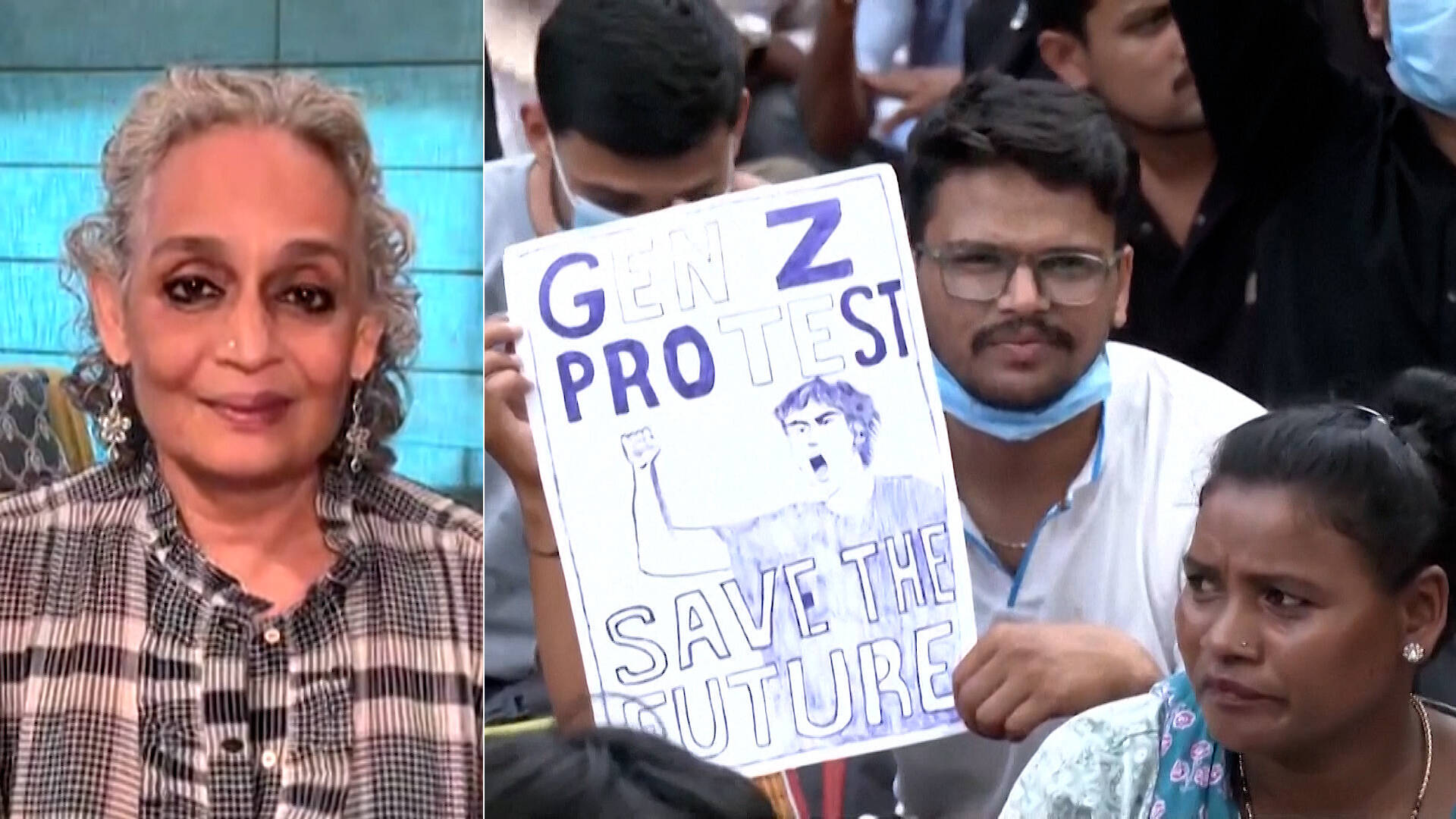
US independent broadcaster Democracy Now! put India's Cockroach Janta Party (CJP) on its 24 July 2026 programme, interviewing Booker Prize-winning writer Arundhati Roy from New Delhi about a youth revolt that began as a joke and became a national challenge to Prime Minister Narendra Modi's government.
Host Amy Goodman introduced the segment with the movement's origin story: India's chief justice compared unemployed youth to cockroaches and parasites; students answered by forming CJP, demanding the resignation of the education minister over national exam-question leaks that forced millions to retake tests and left some aspirants dead by suicide. The same broadcast noted that Ladakh activist Sonam Wangchuk had that day ended a 26-day hunger strike begun in solidarity with the protests.
Roy's companion essay in The Wire, published 22 July under the headline "Cockroach Democracy: Unarmed and Dangerous," opens with a line that has since circulated widely among protesters:
"For the first time in years, it feels wonderful to be Indian. Just when hope seemed lost, they came. Young roaches riding in on the rain."
From a judicial slur to Jantar Mantar
According to Roy's Wire account, the spark was a contemptuous remark by Chief Justice of India Surya Kant likening some unemployed young Indians to cockroaches. Boston-based student Abhijeet Dipke replied on Instagram: "What if all cockroaches come together?" Millions answered. CJP was born, with Dipke cast as what Roy calls the "Pied Piper of cockroaches."
Its first demand, Roy writes, was the resignation of Education Minister Dharmendra Pradhan. The Wire essay cites an opposition estimate of 152 public exam-paper leaks since 2014, and states that after the recent National Eligibility cum Entrance Test (NEET) leak, 12 distressed students died by suicide. Parents, she notes, had sold land and homes to fund years of preparation and exam fees — a burden she labels a "novel form of legal extortion."
Dipke flew back from Boston on June 6 and went straight from the airport to Delhi's Jantar Mantar protest ground. Wangchuk joined and declared an indefinite hunger strike; six university students from the All India Students Association (AISA) began a parallel fast on an adjacent stage, Roy records.
Police batons, and a broadcast the government cannot script
Democracy Now! aired a translated clip of Dipke speaking after Delhi Police attacked student protesters:
"Today, what the Delhi police have done, the way they beat students, the way they hit them in their heads, it was very shameful. Due to this, the country’s reputation is being damaged worldwide. And we all know why Delhi police did all of this: because they received orders from Narendra Modi and Amit Shah."
On the same programme, Roy described the street energy around her home and the wider political meaning of young people reclaiming an insult. Asked to place CJP beside other recent youth uprisings, she told Goodman and co-host Juan González that India's moment was shaped by a generation watching democratic space shrink — and refusing to stay disposable.
Roy told Democracy Now!:
"Well, what’s happening in India, what’s happening just kilometers from my home, where I will be shortly, is not thousands, Amy, but tens and tens of thousands of young people who have just flooded into the city, and now this has spread to cities all over North India, basically. And it started off as students, of course, as you said. You know, Abhijeet Dipke, just as a joke, wrote on Instagram, “What if all the cockroaches came together?” And they did, first online, and now in physical form."
Comparing the Indian agitation with neighbouring student-led upheavals, she argued the Indian case grew from accumulated humiliation over jobs, exams and dignity:
"Well, how would I compare it to Bangladesh, Nepal and Sri Lanka? You know, I don’t think those comparisons would be correct, because India is too vast and diverse a country for, you know, a simple sort of student-led coup to take over."
On the jobs crisis itself, Roy was blunt:
"The youth unemployment crisis is beyond belief, you know? And I don’t want to quote figures to you, because those figures are rubbish."
She also trained fire on the media environment around the protests — praising independent digital voices while accusing much of mainstream television of laundering official narratives:
"So, I’ll start by saying that the most wicked element in India in the last — you know, since Modi came to power, has been the corporate-owned mainstream media. It’s not just that they are frightened; they are part of the project, enthusiastically a part of the project. We have this saying over here."
Why the dual package matters
Taken together, the 22 July Wire essay and the 24 July Democracy Now! interview form one of the most detailed English-language packages yet from a major Indian public intellectual on CJP's early phase — before Education Minister Pradhan's later resignation and the movement's next online battles. Neither piece has previously been digested on this desk.
Roy's framing is not neutral reportage; it is advocacy prose from a long-time critic of the Modi government. The factual spine she and Democracy Now! lay down, though, matches the sequence already documented across wire services: a judicial insult, a viral reclamation, NEET-leak anger, Jantar Mantar, Wangchuk's strike, and police force against students. For an international audience that still meets Indian politics mainly through election tallies and diplomatic summits, the broadcast's plain question — what happens when a generation refuses the label "parasite" — is the story.
Democracy Now! labelled its transcript a rush copy, not a final form. Quotes above are taken from that published rush transcript and from the Wire essay's article body as served on 8 August 2026.
Sources cited
CJP policy: every fact in this article is traceable to a public source. We never publish what we cannot verify.
- ›Democracy Now! 'Cockroach Democracy': Arundhati Roy on India's Youth-Led Protest Movement and Modi's Collapsing Support — https://www.democracynow.org/2026/7/24/india_cockroach_movement_arundhati_roy
- ›Arundhati Roy, The Wire: Cockroach Democracy: Unarmed and Dangerous — https://thewire.in/rights/cockroach-democracy-unarmed-and-dangerous
Got a tip on this story? Our newsroom follows up on every lead. Reach us via the submission page.