Turkish Daily Sabah: India's Gen Z 'Cockroach' Protest Shakes Modi's Grip
Daily Sabah details how a satirical youth movement forced India's education minister out, exposing a generational fault line for Modi.
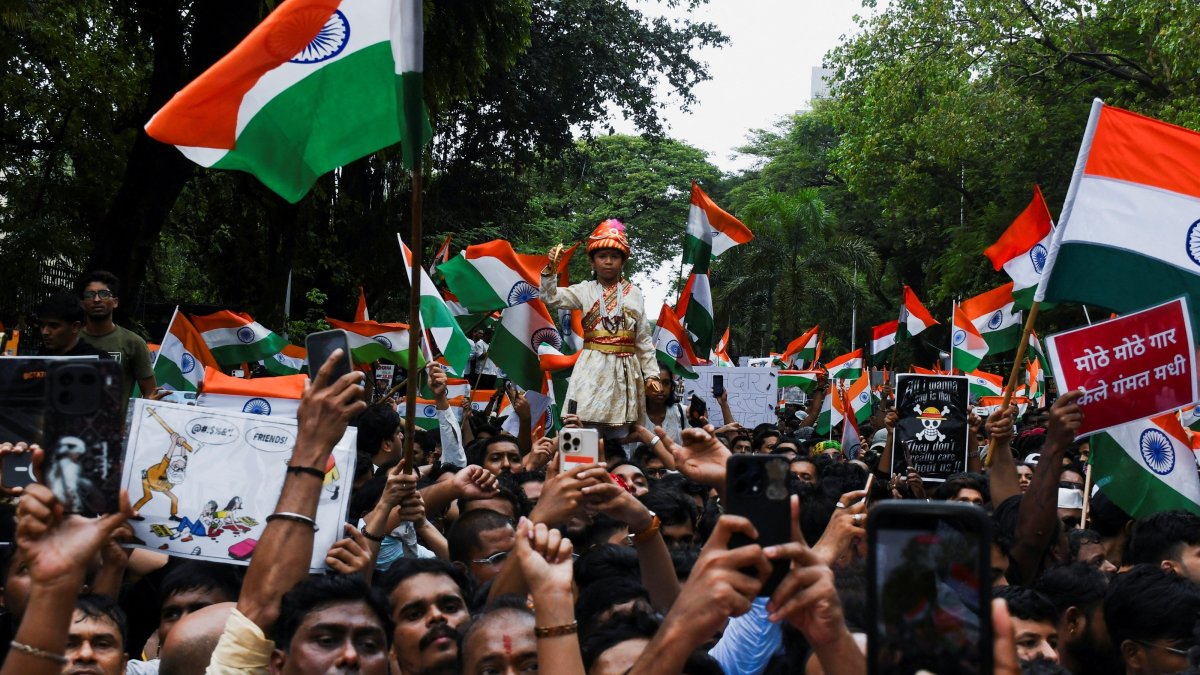
A sitting Supreme Court chief justice called India's unemployed youth "parasites and cockroaches" in May. A medical-entrance exam leak weeks later invalidated results for 2.2 million students. Out of that spark, a satirical online page — the Cockroach Janta Party (CJP) — mushroomed into a street movement that camped at Jantar Mantar, drew pellet‑gun fire on July 20, and forced Education Minister Dharmendra Pradhan to resign on July 25. Turkish daily Daily Sabah frames the episode as "one of the biggest tests of Modi's leadership" and a Gen Z revolt that has rewritten the rules of Indian protest.
What we can verify
- CJI remark and CJP birth — Chief Justice Surya Kant's "cockroach" comment in May prompted student Abhijeet Dipke to post "What if all cockroaches come together?" and launch the CJP as a parody of the ruling BJP. Daily Sabah and Truthout both trace the origin to this exchange.
- NEET leak and retake order — The National Eligibility cum Entrance Test (NEET) paper leak was confirmed by the National Testing Agency; the government ordered a re‑exam for over 2.2 million candidates.
- Jantar Mantar occupation and July 20 crackdown — Protesters gathered for weeks at Delhi's designated protest site. On July 20, police used tear gas, batons and pellet guns; Truthout reports over 100 injured, one protester on a ventilator. Daily Sabah cites Human Rights Watch calling for an investigation.
- Sonam Wangchuk hunger strike — Veteran activist Sonam Wangchuk began a fast in late June; police removed him on July 19, galvanising larger crowds.
- Pradhan resignation and protest end — Dharmendra Pradhan resigned on July 25, the first full cabinet minister to quit under Modi. CJP announced the end of its sit‑in the same day.
What remains unverified
- Exact injury count and pellet‑gun details — Police have not released an official casualty list; the "over 100 injured" figure comes from protester accounts and rights‑group statements. Marked [unverified].
- Claim of 21 student suicides linked to the exam cancellation — Cited by CJP and reported by Truthout via the People's Archive of Rural India; no independent government or hospital data has been published. [unverified].
- Foreign‑funding allegations — Indian government allies have suggested external backing; no evidence has been presented in court or by credible international watchdogs. [unverified].
Why it matters abroad
Daily Sabah draws a parallel with youth uprisings in neighbouring countries — Bangladesh, Sri Lanka — arguing that India's "Gen Z revolution" signals a regional pattern: educated, digitally native cohorts rejecting the old social contract of "study hard, succeed." The outlet notes the movement's weaponisation of satire and Instagram reels, bypassing traditional media that it says "tried to create a narrative that the protests were funded by George Soros." That narrative, Truthout reports, "didn't stick."
For Modi, the episode is a rare crack in an image of invulnerability built over 12 years. The prime minister's first direct social‑media appeal to protesters — a selfie video mocked for its awkward framing — underscored a leadership unaccustomed to being challenged on its own turf. Whether the "cockroach" moment becomes a lasting political shift or a contained pressure valve depends on whether the government addresses the structural grievances — graduate unemployment above 15%, a stalled job market, and a judiciary perceived as aligned with the executive — that lit the fuse.
Sources: Daily Sabah (op‑ed, 31 July 2026); Truthout (investigative report, 30 July 2026).
Sources cited
CJP policy: every fact in this article is traceable to a public source. We never publish what we cannot verify.
Got a tip on this story? Our newsroom follows up on every lead. Reach us via the submission page.