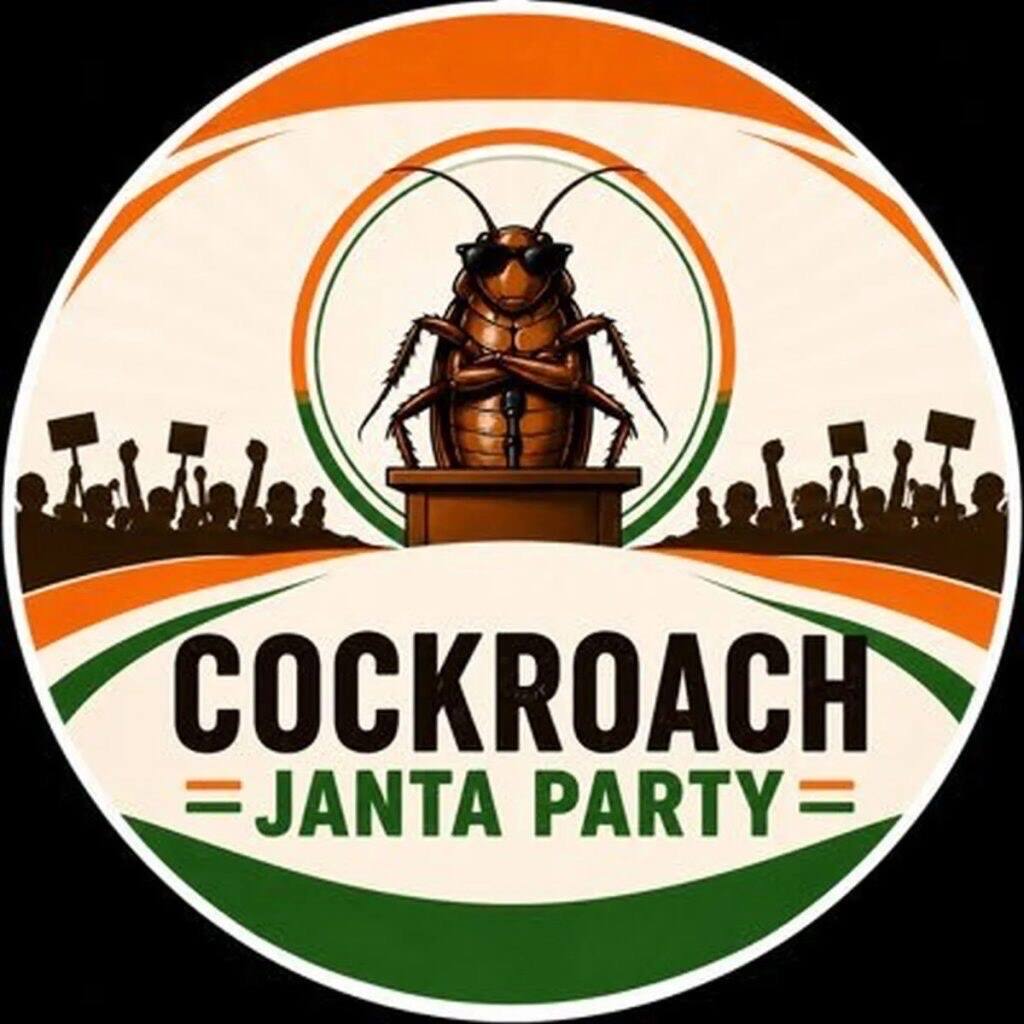
CNN: After CJP Forces Minister Out, India Wonders What Comes Next
CNN analysis finds the Cockroach Janta Party's first scalp may embolden a generation that grew up under Modi to demand accountability across the board.

For more than a decade, Narendra Modi has projected an aura of political invincibility. His government outmanoeuvred opposition parties, dominated the airwaves, and reduced the space for public dissent to a sliver. Then, over one July weekend, a satirical movement barely weeks old forced his education minister to quit.
The resignation of Dharmendra Pradhan on 25 July marked the first cabinet exit under popular pressure in Modi's twelve-year premiership, outside of a sexual-misconduct case in 2017. CNN's 28 July dispatch — "CJP: What's next in India after Gen-Z protest group managed to get Modi to blink" — frames the moment not as an isolated climb-down but as a potential rupture in the contract between India's youth and its strongman prime minister.
What the reporting confirms
-
Protest timeline and scale: Tens of thousands of Gen Z demonstrators occupied Jantar Mantar in New Delhi for days, organised under the banner of the Cockroach Janta Party (CJP). The movement began as online satire after the Chief Justice of India referred to unemployed youth as "cockroaches" in May, then mushroomed into a physical sit-in demanding Pradhan's resignation over the NEET-UG medical entrance exam paper leak. (CNN; BBC confirms the sit-in ended after Pradhan's exit.)
-
The resignation: Pradhan submitted his resignation on Saturday 25 July; Modi accepted it the same day. The BBC and Reuters corroborate the sequence and note the government simultaneously announced compensation for families of students who died by suicide after the exam scandal, and a pledge to withdraw police cases against protesters.
-
Protester testimony: Software engineer Akshit Tyagi, 22, told CNN: "A week ago you couldn't really give any feedback to the government… Now everyone has come out… and people are realising they can actually demand things from the government." The quote is directly attributed in the CNN piece.
-
CJP origins: The article identifies Abhijeet Dipke, a Boston University graduate, as the founder of the satirical online handle that became a national movement. This matches prior reporting by NPR and The Guardian.
-
Youth unemployment data: CNN cites a "recent report" showing nearly 40% of graduates aged 25 and under are unemployed. The same Azim Premji University study has been referenced by NPR (27 July) and The Guardian (26 July), which put the figure at 38–40% for the 15–25 cohort.
-
Regional comparison: CNN notes that Sri Lanka (2022), Nepal (2025), and Bangladesh (2024) all saw youth-led upheavals topple or shake governments. This contextual framing is analytical, not a verifiable fact claim; it is presented as the correspondent's assessment.
-
Supreme Court intervention: Reuters reported on 28 July that India's top court ordered "no coercive action" against youth protesters and directed the release of minors detained during the agitation. This legal backstop reinforces the protesters' space to organise.
What we can verify
| Claim | Source(s) | Status |
|---|---|---|
| Pradhan resigned 25 July 2026 after CJP protests | CNN, BBC, Reuters | Verified |
| CJP founded by Abhijeet Dipke (Boston Univ. grad) | CNN, NPR, Guardian | Verified |
| NEET-UG paper leak triggered protests | CNN, BBC, Indian Express | Verified |
| ~40% graduate youth unemployment (Azim Premji Univ.) | CNN, NPR, Guardian | Verified (same study) |
| Supreme Court barred coercive action vs protesters | Reuters (28 Jul) | Verified |
| Protesters celebrated resignation at Jantar Mantar | CNN, BBC | Verified |
| CJP called off sit-in "in good faith" | BBC, DW | Verified |
What remains unverified / analytical
-
Whether the CJP victory "emboldens others to believe change is possible" — this is the CNN correspondent's interpretation of protester sentiment, supported by Tyagi's quote but not independently measurable.
-
Direct causal link between regional youth uprisings and potential Indian trajectory — the Sri Lanka / Nepal / Bangladesh parallel is editorial framing, not established causality.
-
Long-term impact on Modi's "strongman aura" — described by CNN as a "blow to the personal aura"; this is political analysis, not a documented fact.
-
Exact protester headcounts — "tens of thousands" appears in CNN and BBC; no official police estimate has been released. Treated as
[unverified]where specific numbers are cited elsewhere.
Why it matters
International desks are converging on the same conclusion: the CJP episode is a stress test for a governance model that has relied on narrative control. When a meme-born movement extracts a cabinet scalp in days, the playbook — dismiss, discredit, wait out — fails. The question every foreign bureau is now filing is whether July 2026 was a punctuation mark or a turning page.
Sources cited
CJP policy: every fact in this article is traceable to a public source. We never publish what we cannot verify.
- ›CNN — CJP: What's next in India after Gen-Z protest group managed to get Modi to blink — https://edition.cnn.com/2026/07/27/india/india-cockroach-protests-what-next-intl-hnk
- ›BBC — India's 'cockroach' protest called off after education minister quits — https://www.bbc.com/news/articles/cdx828gj5xko
- ›Reuters — India's top court orders no coercive action against youth protesters — https://www.reuters.com/world/india/indias-top-court-orders-no-coercive-action-against-youth-protesters-2026-07-28/
Got a tip on this story? Our newsroom follows up on every lead. Reach us via the submission page.