
CNBC: India Exam Leak Exposes Gen Z Jobs Crisis Far Deeper Than One Test
CNBC reports the NEET paper leak was only the trigger — graduate unemployment near 40% fuels the Gen Z anger that forced a minister out.
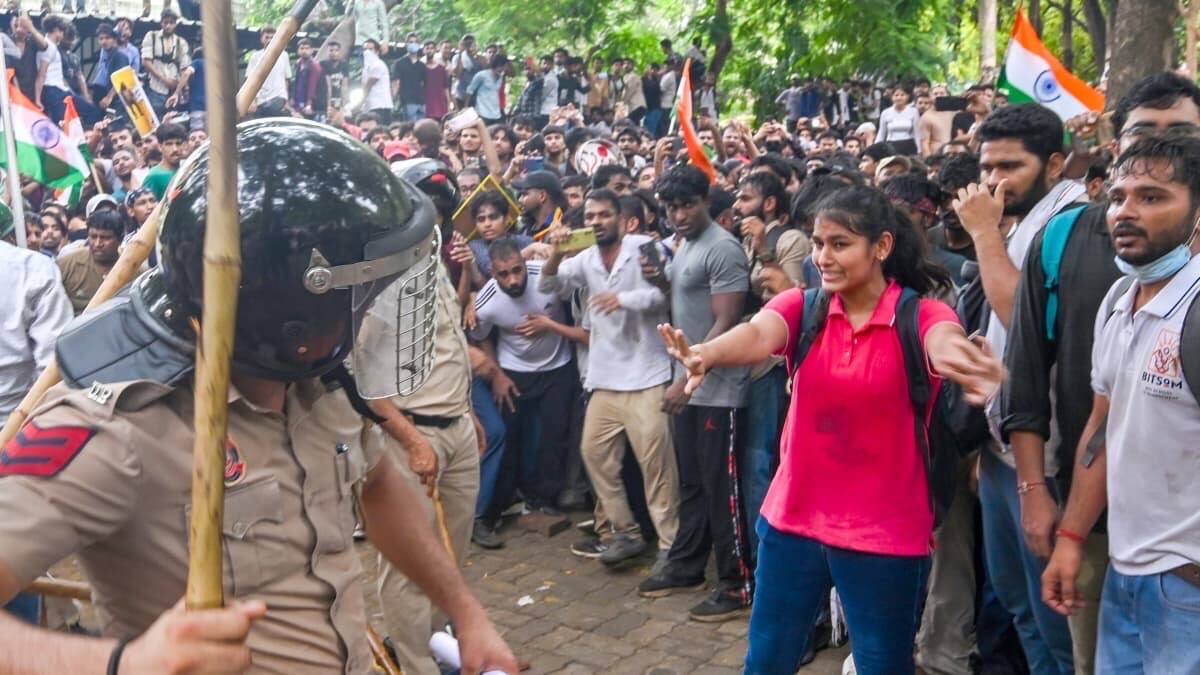
The leak of a medical entrance exam paper in May lit the fuse. But the explosion that forced Education Minister Dharmendra Pradhan from office on July 25 was powered by something far more combustible: a generation of graduates who have done everything right and still cannot find secure work.
CNBC's August 2 analysis, reported by Priyanka Salve and Raksha Murali, frames the Cockroach Janta Party (CJP) protests as a symptom rather than the disease. The NEET-UG paper leak — and the suicides of more than 20 students in its wake — was the proximate cause. The underlying condition is a graduate unemployment rate that the State of Working India 2026 report places close to 40% among 15- to 25-year-olds, with graduates accounting for two-thirds of India's unemployed in 2023.
From exam scandal to structural indictment
The Cockroach Janta Party — a satirical movement born after the Chief Justice of India likened unemployed degree-holders to "cockroaches" — channelled that anger into a sit-in at Jantar Mantar that swelled into nationwide demonstrations. On July 18, police forcibly hospitalised hunger-striking activist Sonam Wangchuk. Two days later, tens of thousands marched on Parliament. Baton charges, tear gas, and pellet guns followed; videos spread on Instagram, bypassing mainstream television.
Pradhan resigned on July 25. Prime Minister Narendra Modi appointed Pralhad Joshi as his successor and announced a task force headed by tech entrepreneur Nandan Nilekani to overhaul the examination system. On July 31, Parliament passed amendments to the anti-paper-leak law, raising maximum penalties to ten years' imprisonment and a 50 lakh rupee fine.
But economists warn the legislative response treats the trigger, not the cause.
"While the exam leaks were the immediate trigger for the protest, the underlying issue is the limited supply of secure, well-paid jobs," Alexandra Hermann Prasad, lead economist at Oxford Economics, told CNBC.
The numbers behind the anger
- Graduate unemployment: ~40% for 15-25 age group (State of Working India 2026)
- Youth unemployment (15-29): 16.2% in June 2026, up from 13.8% a year earlier (government Periodic Labour Force Survey, cited by BBC)
- Job placement: Fewer than 7% of jobseekers secured permanent salaried work within a year; fewer than 4% landed white-collar roles (Azim Premji University 2026 study, cited by BBC)
- NEET applicants: Over 2.2 million in 2026, a 50% rise since 2019 (National Testing Agency data)
- Graduate output vs jobs: ~5 million graduates annually 2004-2023, but only ~2.8 million found jobs; fewer still secured salaried employment (State of Working India 2026)
Neelanjan Sircar, associate professor at Ahmedabad University, put it plainly to CNBC: "In a country where nearly one in two graduates is not getting a job, young people are choosing to take routes like the NEET that guarantee one."
Political aftershocks
The protests exposed a vulnerability Modi's government has not faced since the 2021 farmers' movement. Risk consultancy Teneo's Arpit Chaturvedi told CNBC that the ruling party's developmental narrative is failing to resonate with voters under 30 — a cohort set to become the single largest voting demographic by the 2029 general election, with key state polls in Uttar Pradesh arriving in 2027.
Copycat movements have already emerged. The E20 Janta Party demands the removal of the 20% ethanol-blended petrol mandate and the resignation of Road Transport Minister Nitin Gadkari. Farmer groups are preparing marches toward Delhi challenging provisions in the proposed U.S.-India trade deal.
Michael Kugelman of the Atlantic Council described a "galvanizing effect" on civil society — the last time the central government conceded to street demonstrators was the farmers' victory in 2021.
What we can verify
- CNBC published an in-depth analysis on 2 August 2026 examining the economic and political fallout of the CJP protests, citing commentary from Michael Kugelman (Atlantic Council), Arpit Chaturvedi (Teneo), Alexandra Hermann Prasad (Oxford Economics), and Neelanjan Sircar (Ahmedabad University).
- BBC published a first-person feature on 27 July 2026 with testimonies from five Gen Z activists (Sakhi, Somaya Korde, Harshvardhan Kadam, Swaraj Priyo, Varuni Poorva), government youth-unemployment data (16.2% in June 2026 vs 13.8% a year earlier), and the Azim Premji University job-placement study (<7% permanent salaried work within a year).
- Associated Press confirmed on 25 July 2026 that the CJP called off protests after the government accepted its demands, including Pradhan's resignation and the Nilekani-led task force.
- Parliament passed the Public Examinations (Prevention of Unfair Means) Amendment Bill on 31 July 2026, increasing maximum penalties to 10 years' jail and a 50 lakh rupee fine.
- Graduate unemployment near 40% cited from the State of Working India 2026 report by Azim Premji University.
What remains unverified
- Detailed implementation timeline for the Nilekani task force's recommendations on examination reform [unverified].
- Whether the anti-paper-leak law amendments will meaningfully deter organised leak networks versus penalising individual students [unverified].
- Formal government response or police filings regarding civil claims by copycat groups like E20 Janta Party [unverified].
- Exact number of FIRs filed specifically for protest slogans versus other charges during the July demonstrations [unverified].
Sources cited
CJP policy: every fact in this article is traceable to a public source. We never publish what we cannot verify.
- ›CNBC — An exam leak in India exposed a Gen Z jobs crisis that goes much deeper — https://www.cnbc.com/2026/08/02/india-exam-leak-protests-jobs-crisis-gen-z-unemployment-modi.html
- ›BBC — 'This is just the start': India's Gen Z protesters force out a minister, but what next? — https://www.bbc.com/news/articles/c8dng1v72lno
- ›Associated Press — India's 'Cockroach' movement ends protests after education minister resigns — https://apnews.com/article/india-cockroach-education-minister-56d69c289589f057c0e72cde0c3d75d3
Got a tip on this story? Our newsroom follows up on every lead. Reach us via the submission page.