CFR: India's CJP Echoes 1970s JP, Not Arab Spring
CFR's Sadanand Dhume says India's Cockroach Janta Party echoes Jayaprakash Narayan's 1970s revolt, not Arab Spring regime collapses.
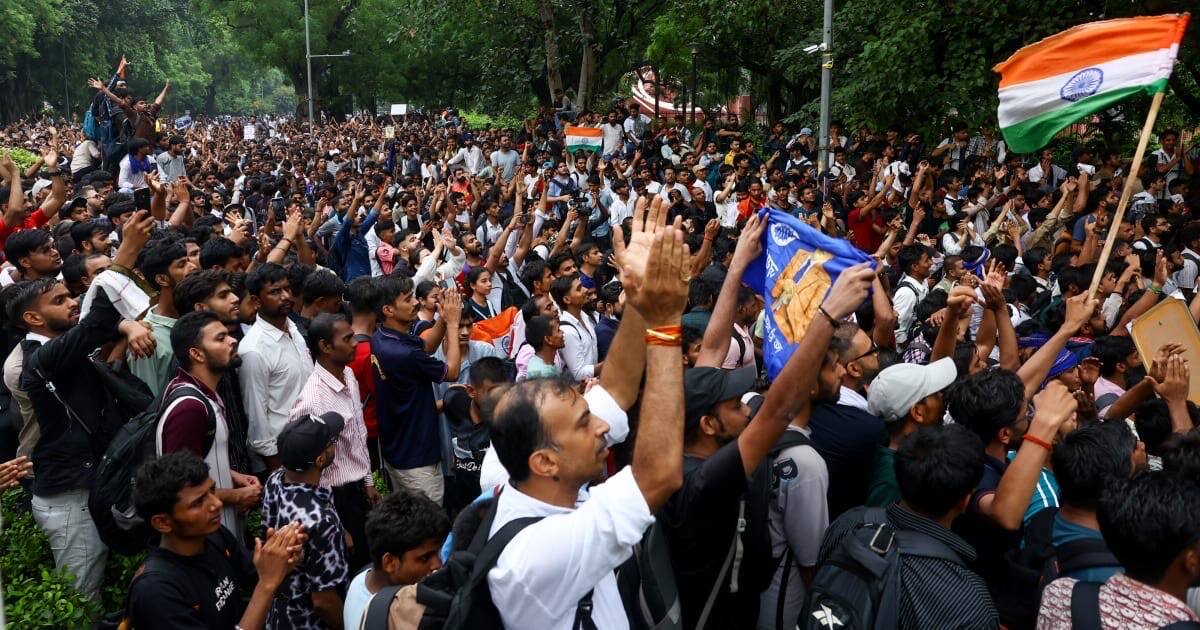
Global foreign-policy desks spent late July casting India's Cockroach Janta Party (CJP) as the latest chapter in a South Asian youth revolt. A Council on Foreign Relations essay by Sadanand Dhume pushes back: the useful comparison is not Cairo 2011 or Kathmandu 2025, but Jayaprakash Narayan's mid-1970s challenge to Indira Gandhi.
Dhume's piece, published 31 July on CFR.org under the title "India's Cockroach Party Protests Have a Powerful Precedent—and It Isn't the Arab Spring," opens with a 1975 New York Times quotation from Narayan — "Everything in the country is rotten… Unemployment goes on rising" — and notes that a reader could mistake the words for a Jantar Mantar speech last month. The argument is historical, not nostalgic. Corruption, joblessness, a long-serving prime minister accused of personality politics, and ruling-party talk of foreign plots all reappear. What does not, Dhume insists, is an Egyptian- or Bangladeshi-style collapse of the state.
What international analysis is saying
Dhume walks the familiar CJP timeline with care. A May remark by India's chief justice likening unemployed youth to "cockroaches" gave Abhijeet Dipke, then a Boston-based public-relations graduate, the insult he flipped into a movement. Instagram following outgrew the ruling Bharatiya Janata Party's. Sit-ins opened at Jantar Mantar in June. Sonam Wangchuk joined with a hunger strike from 28 June demanding Education Minister Dharmendra Pradhan's exit; police moved Wangchuk to a government hospital on 18 July. Two days later, thousands trying to walk toward Parliament met batons, tear gas and pellet guns. Police said at least sixty protesters and more than one hundred officers were injured; CJP put protester injuries nearer one hundred and fifty. Pradhan resigned on 25 July.
The structural drivers Dhume lists match what other foreign desks have been filing. About 30 percent of India's population is aged fifteen to twenty-nine. Economists at Azim Premji University found roughly 40 percent of graduates under twenty-five unemployed. The government voided the NEET medical entrance after evidence of a leak affecting more than two million candidates — the second NEET compromise in three years. A 2024 Indian Express count of forty-one major exam leaks across fifteen states in five years sits in Dhume's footnotes as the longer arc behind one summer's anger.
Where Dhume breaks with the pack is scale and outcome. Arab Spring uprisings toppled rulers in Egypt, Libya and Tunisia. Mobs forced the Rajapaksas from power in Sri Lanka in 2022; students drove Sheikh Hasina into exile from Bangladesh in 2024; Nepal's Gen Z protests in 2025 set fire to parliament and the Supreme Court. India, he writes, is a different machine: a federal democracy whose army stays out of politics, whose capital cannot paralyse the whole country, and whose political, financial and technological power is not locked in one city. "Modi is unlikely to face the fate of Egypt's ousted former President Hosni Mubarak or Bangladesh's Sheikh Hasina," Dhume concludes — while warning that Indira Gandhi also looked unassailable until voters got another chance.
The Guardian's editorial board, writing three days earlier, struck a harsher political note without claiming regime change. Pradhan, it said, was "the first senior minister in Mr. Modi's 12 years in power to be forced from office by a mass-protest movement." The paper stressed that exam corruption cuts across the BJP's preferred religious cleavage and that CJP leaders, having learned pressure works, were already accusing the government of breaching settlement terms and threatening to remobilise.
A separate cultural track arrived the same week from New Lines Magazine. Its 31 July reportage, "How India's Gen Z Made Profanity Political," documents how crude slogans aimed at Modi — including the widely circulated "Neem ka patta kadwa hai…" couplet — became the post-resignation weapon of choice for government allies seeking to discredit the movement. Actor Swara Bhasker told New Lines the generation is "much more direct" and rejects the etiquette that once put Modi on a pedestal. Screenwriter Varun Grover said Gen Z "just speak like that" at their first street protest. The piece also records police cases and doxxing campaigns against people filmed using abuse, including a Noida FIR against a 25-year-old woman — a domestic legal story now legible to foreign readers as free-speech fallout, not street theatre.
What we can verify
- CFR published Sadanand Dhume's analysis on 31 July 2026 arguing that CJP is better read against Jayaprakash Narayan's 1974–75 movement and Indira Gandhi's later Emergency reckoning than against Arab Spring or recent South Asian regime collapses (CFR).
- Dhume's factual spine — chief justice "cockroach" remark, Dipke's Boston origin and return, Jantar Mantar sit-in, Wangchuk hunger strike and hospital transfer, 20 July force including pellet guns, Pradhan resignation on 25 July, police vs CJP injury figures — is presented as reported background in that essay (CFR).
- The Guardian editorial of 28 July 2026 called Pradhan's exit the first senior Modi-era ministerial fall to mass protest and noted CJP claims of further arrests plus a threat to remobilise (The Guardian).
- New Lines Magazine published a 31 July 2026 reported essay on Gen Z protest profanity, quoting Swara Bhasker and Varun Grover and describing post-protest police and political backlash over slogans (New Lines).
What remains unverified
- Whether CJP can convert street leverage into a durable national organisation or electoral vehicle remains [unverified] forward-looking analysis; Dhume himself calls any Indira-style electoral reversal "woefully premature" to predict.
- Exact nationwide arrest totals after the Jantar Mantar settlement, and how many FIRs have actually been withdrawn versus held under "criminal antecedents" caveats, are not independently audited in the international pieces cited here.
- Injury counts for 20 July remain disputed between police (about sixty protesters) and CJP (about one hundred and fifty); neither figure is treated here as a settled official total.
Sources cited
CJP policy: every fact in this article is traceable to a public source. We never publish what we cannot verify.
- ›Council on Foreign Relations — India's Cockroach Party Protests Have a Powerful Precedent—and It Isn't the Arab Spring (Sadanand Dhume, 31 July 2026) — https://www.cfr.org/articles/indias-cockroach-party-protests-have-a-powerful-precedent-and-it-isnt-the-arab-spring
- ›The Guardian — The Guardian view on India's gen Z revolt: the cockroaches are coming together (28 July 2026) — https://www.theguardian.com/commentisfree/2026/jul/28/the-guardian-view-on-indias-gen-z-revolt-the-cockroaches-are-coming-together
- ›New Lines Magazine — How India's Gen Z Made Profanity Political (31 July 2026) — https://newlinesmag.com/reportage/how-indias-gen-z-made-profanity-political/
Got a tip on this story? Our newsroom follows up on every lead. Reach us via the submission page.