
BBC: Why India's Youth Anger Has Become Modi's Biggest Challenge
BBC analysis finds the Cockroach Janta Party protests exposed a structural crisis — 360 million young Indians face a labour market where graduate unemployment hovers near 40 percent and the education-to-employment pipeline is broken.
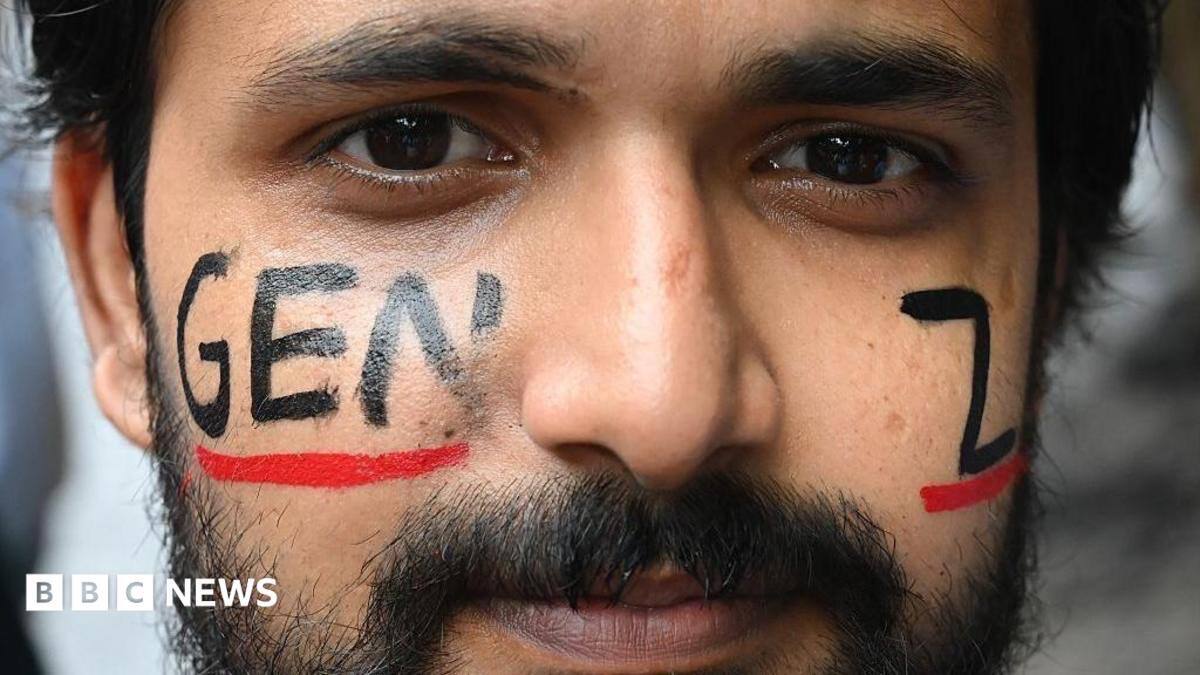
India has the world's largest youth population — over 360 million people between the ages of 15 and 29 — and a government that just lost its education minister to a protest movement that began with a meme and ended with a resignation. The Cockroach Janta Party (CJP) forced Dharmendra Pradhan out of office on 25 July after weeks of demonstrations over repeated entrance exam paper leaks. But as BBC correspondent Soutik Biswas reported on 3 August, the minister's departure may be the easier part. The harder problem is structural, and it predates this government.
The numbers are stark. In 1983, four percent of Indians in their twenties were graduates; 13 percent of them were unemployed. In 2023, 28 percent were graduates and 67 percent of them had no job. Graduate unemployment has hovered at 35 to 40 percent for a quarter century, but the absolute scale has exploded. Between 2004 and 2023, roughly five million graduates entered the workforce each year. Only about 2.8 million found employment. The rest joined the swelling ranks of the educated unemployed — a demographic that now fuels the CJP's ranks.
"The labour market has become brutal in the last 10 years," veteran economist Santosh Mehrotra, author of India Out of Work: Rethinking India's Growth Story, told the BBC. "Non-farm jobs have not been growing and real wages have stagnated." The State of Working India 2026 report from Azim Premji University confirms the diagnosis: the transition from education to employment remains a major challenge, particularly for graduates. Unemployment among the young runs nearly four times higher than among older workers and well above global averages.
The NEET-UG paper leak in May 2026 was the spark, not the fuel. Over 2.2 million medical aspirants sat the exam on 3 May. The leak forced a cancellation and a retest. At least 21 students died by suicide in the weeks that followed, their families blaming the scandal and the uncertainty. The CJP, founded by Boston University graduate Abhijeet Dipke, turned that grief into a sit-in at Jantar Mantar that drew tens of thousands by mid-July. On 20 July, a march on Parliament met batons, tear gas, and — the BBC has since confirmed — pellet guns. Pradhan resigned five days later.
Prime Minister Narendra Modi moved quickly. He announced fast-track courts for exam-leak cases and appointed tech billionaire Nandan Nilekani to lead an examination-reform committee. But experts say the crisis is deeper than process. India's welfare state has expanded — direct cash transfers now reach hundreds of millions — which Mehrotra reads as a private acknowledgment that the jobs engine is misfiring. The government's infrastructure-led growth model has not generated the non-farm employment that graduates need.
The CJP's grievance is not ideological. It is administrative. "The state's inability to conduct examinations fairly and prevent paper leaks makes it a very different kind of political challenge to the BJP," Rahul Verma of the Centre for Policy Research told the BBC. The movement's constituency — aspirational young Indians and their parents — cuts across caste, class, and gender. That breadth makes it harder to dismiss or counter with the usual political narratives.
What we can verify
- Youth population and unemployment data: India has over 360 million people aged 15–29. Graduate unemployment has remained at 35–40 percent for 25 years; in 2023, 67 percent of graduates aged 20–29 were not employed (BBC; State of Working India 2026).
- NEET-UG leak and retest: The 3 May 2026 NEET-UG question paper was leaked; the National Testing Agency cancelled results and ordered a retest for over 2.2 million candidates (BBC).
- Student suicides: Indian media reported at least 21 student suicides allegedly linked to the NEET cancellation and retest; the BBC documented two families in Ahmedabad and Sikar, Rajasthan (BBC).
- CJP protests and minister's resignation: The Cockroach Janta Party led a sit-in at Jantar Mantar from early June; a 20 July march on Parliament triggered a police crackdown; Education Minister Dharmendra Pradhan resigned on 25 July (BBC; BBC).
- Government response: Fast-track courts for exam-leak cases announced; Nandan Nilekani appointed to lead examination reform committee (BBC).
- Expert analysis: Santosh Mehrotra and Rahul Verma on structural labour-market failure and the administrative nature of the CJP challenge (BBC).
What remains unverified
- Whether the Nilekani committee will produce enforceable reforms: The committee's mandate, timeline, and powers have not been publicly detailed. Past reform committees have often produced reports without implementation [unverified].
- Exact NEET-linked suicide count: The BBC cites "at least 21" from Indian media aggregations; no official government or coroner dataset has been published. NPR cites "around a dozen" [unverified].
- Scale of pellet-gun injuries on 20 July: The BBC has confirmed four hospital-treated cases with ballistic expert corroboration; CJP and hospital tallies diverge from the official "60 protesters injured" figure. A CRPF internal probe reportedly found seven pellet rounds fired, five hitting protesters, but the full report is not public [unverified].
- Long-term political impact on BJP: Analysts disagree on whether the CJP marks a durable shift in youth politics or a episodic flare-up. Verma argues the BJP cannot easily counter a governance-based grievance; others note the party's organisational depth and media control [unverified].
A challenge that predates the headlines
The BBC's 3 August analysis frames the CJP protests as the visible fracture of a fault line that has widened for decades. India's graduate output has grown exponentially; its graduate employment has not. The coaching-centre economy that families mortgage their land to access — documented by both BBC and NPR — is a symptom, not the cause. When Prashant Patel, father of 17-year-old Kahaan who jumped to his death in Ahmedabad, travelled to Delhi to join the CJP protests, he said he was not there for compensation. "I wanted accountability," he told the BBC. "Our duty is to hear the voices of the young before they fall silent."
That sentence may outlast the minister's resignation. The question now is whether a government that has built its political brand on decisive action can confront a crisis that admits no quick fix — one that requires not a new exam calendar but a working labour market for 360 million young Indians. The CJP called off its agitation after Pradhan's exit, declaring its demands met. But the structural grievance remains. As one protester put it: "This is just the start."
Sources cited
CJP policy: every fact in this article is traceable to a public source. We never publish what we cannot verify.
- ›BBC News — Why India's youth anger has become Modi's biggest challenge — https://www.bbc.com/news/articles/cm2gv4dgqv4o
- ›BBC News — 'What was my fault?': How India's exam paper leak ended young lives — https://www.bbc.com/news/articles/crl7jl1d95eo
- ›State of Working India 2026 — Azim Premji University — https://cse.azimpremjiuniversity.edu.in/state-of-working-india-2026
Got a tip on this story? Our newsroom follows up on every lead. Reach us via the submission page.