
BBC: CJP Pellet Wounds Match Birdshot, Experts Say
BBC ballistics experts say CJP protesters' wounds match pellet-gun birdshot; Indian Express CRPF probe reports seven RAF rounds fired July 20.
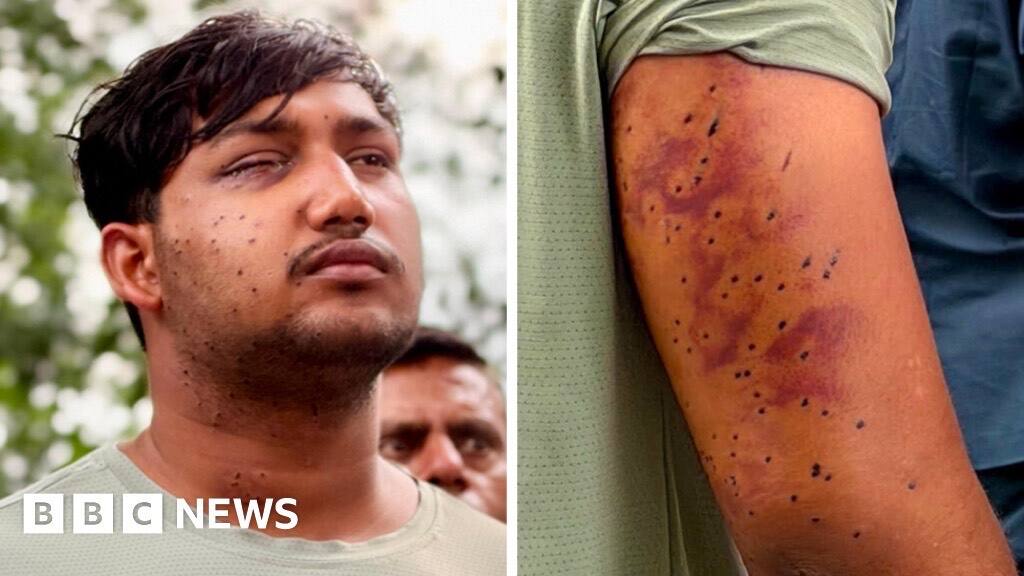
London's BBC has published the first detailed forensic read of the pellet wounds that CJP protesters carried out of New Delhi on 20 July. Independent ballistics experts, not government spokespeople, now say the dozens of tiny round punctures on injured students and a journalist are the tell-tale signature of birdshot fired from a 12-gauge pump-action shotgun.
The piece, by Delhi correspondent Geeta Pandey, does not rest on a single viral clip. It walks hospital records, X-rays, named and anonymised patients, and two armament specialists through the same photographs and video. That is a different standard from the first week of the story, when Delhi Police simply denied owning pellet guns and left the claim floating as protest lore.
What the experts told the BBC
UK-based ballistics forensic scientist Philip Boyce told the BBC the injuries are "definitely from a pellet gun" and that the weapon type is "a 12-gauge pump-action shotgun." The range, he estimated, was "at least 50 feet" — not point-blank — but still capable of life-threatening harm out to 100 feet.
NR Jenzen-Jones, director of Armament Research Services (ARES) in the UK, went further on the video evidence. Images from the protests, he said, "show the police using shotguns for crowd control," and the injury photos are "strongly consistent with the use of birdshot." He noted that Indian forces have a long history of loading shotgun cartridges with small lead pellets in crowd-control settings — munitions that "pepper the body with toxic lead" and can leave life-changing damage.
Pellet guns fire cartridges of roughly 200 to 400 small metal pellets. They are bird-hunting shotguns pressed into crowd control. Several countries restrict or ban that use. In Indian-administered Kashmir, where pellet guns have been used since 2010, Human Rights Watch has compiled official data showing thousands injured, at least 17 killed and dozens blinded. The BBC notes that confirmed use in the capital would be a first for Delhi.
Four cases the BBC could document
The BBC says it has confirmed at least four hospital-treated cases whose wounds experts attribute to pellet fire:
- Mohit (name changed), a 28-year-old journalist, told the BBC he was hit on his right arm and upper back near Connaught Place after 4pm on 20 July. Safdarjung Hospital records he shared show 26 pellet wounds on the right elbow and four on the upper right back. An X-ray shows the objects still embedded; doctors warned surgery could worsen the damage.
- Shaikh Irshad Mansoori, who works in Gurugram, said an RAF personnel pointed a gun at his group as they walked from Connaught Place toward Jantar Mantar. He took pellets to the left eyebrow and chin. Scans showed more than 40 pellets; surgeons at Lady Hardinge removed seven and left one in the neck as too risky. A senior hospital official told the BBC the injuries were from "pellet-type small particles," while declining to call the weapon.
- Sahil Lochab, 19, a Delhi University student and police-exam aspirant, appeared with Congress leader Rahul Gandhi at a press conference with one side of his face and arm peppered with holes. He said he was shot while marching toward the security line and may lose an eye.
- A fourth man was confirmed by a senior hospital official as treated for pellet wounds; the BBC did not name him.
The BBC also published video analysis earlier in the week showing officers firing what look like pellet guns during the same crackdown — a separate, visual track that now sits beside the forensic assessment.
What New Delhi said — and what the CRPF probe found
In the first days after 20 July, Delhi Police called pellet-gun claims "completely false and misleading" and said the force did not possess such weapons. Union minister Jitendra Singh told Parliament that no "bullets" were fired and only tear gas was used; he did not address pellet guns. The BBC says it put questions to CRPF chief Gyanendra Pratap Singh and has not received a reply.
Indian reporting has since moved past the denial. The Indian Express, citing a CRPF internal inquiry into operational logs, reported that a Rapid Action Force personnel fired seven pellet rounds during the Parliament march — five of which hit protesters, two of which hit the ground. Mathrubhumi English carried the same seven-round figure as the row reached Parliament. That internal finding does not replace a court verdict, but it is an official-force paper trail that undercuts the first police line.
What we can verify
- The BBC published a reported investigation concluding that injuries to CJP protesters on 20 July are consistent with pellet-gun (birdshot) fire, based on two independent ballistics experts and hospital documentation for at least four patients (BBC).
- Philip Boyce attributed the wounds to a 12-gauge pump-action shotgun at mid-range; ARES director NR Jenzen-Jones said protest images show shotguns in crowd control and injuries "strongly consistent" with birdshot (BBC).
- A separate BBC video package earlier examined footage of officers firing what appear to be pellet guns during the same crackdown (BBC Video).
- The Indian Express reported a CRPF probe finding that an RAF personnel fired seven pellet rounds on 20 July, five of which struck protesters (Indian Express).
- Mathrubhumi English independently carried the seven-round CRPF-probe figure ahead of the anti-paper-leak bill debate (Mathrubhumi).
- Delhi Police initially denied possessing or using pellet guns; minister Jitendra Singh said no "bullets" were fired without addressing pellet munitions (BBC).
What remains unverified
- A full public CRPF or Delhi Police forensic report naming every weapon, round count and chain of command remains [unverified] outside the internal-probe briefings carried by Indian outlets.
- Exact citywide pellet-injury totals beyond the four BBC-documented cases remain [unverified]; CJP and hospital tallies diverge from the official "60 protesters injured" figure Delhi Police gave for 20 July.
- Claims that every pellet round was fired only after stone-pelting, or only by a single personnel, rest on internal force accounts that have not been tested in open court [unverified].
Sources cited
CJP policy: every fact in this article is traceable to a public source. We never publish what we cannot verify.
- ›BBC News — CJP protest: India's 'Cockroach' protesters have wounds consistent with pellet-gun fire, experts say — https://www.bbc.com/news/articles/c74gwvygkjdo
- ›BBC News — India cockroach protests: Videos of officers firing 'pellet guns' — https://www.bbc.com/news/videos/cgje5l292g2o
- ›The Indian Express — RAF man fired 7 rounds from pellet gun, 5 hit protesters during CJP's Parliament march: Probe — https://indianexpress.com/article/cities/delhi/cjp-parliament-march-student-protest-crpf-raf-pellet-gun-injury-probe-10804898
- ›Mathrubhumi — Student protests: Report says 7 pellet rounds fired; intensifies row before key Bill debate — https://english.mathrubhumi.com/news/india/student-protests-report-says-7-pellet-rounds-fired-intensifies-row-before-key-bill-debate-r54c9f01
Got a tip on this story? Our newsroom follows up on every lead. Reach us via the submission page.