
BBC: How India's NEET Paper Leak Ended Young Lives
BBC investigation reveals two families shattered by NEET exam leak, exposing the human toll behind India's Cockroach Janta Party protests that forced a minister's resignation.
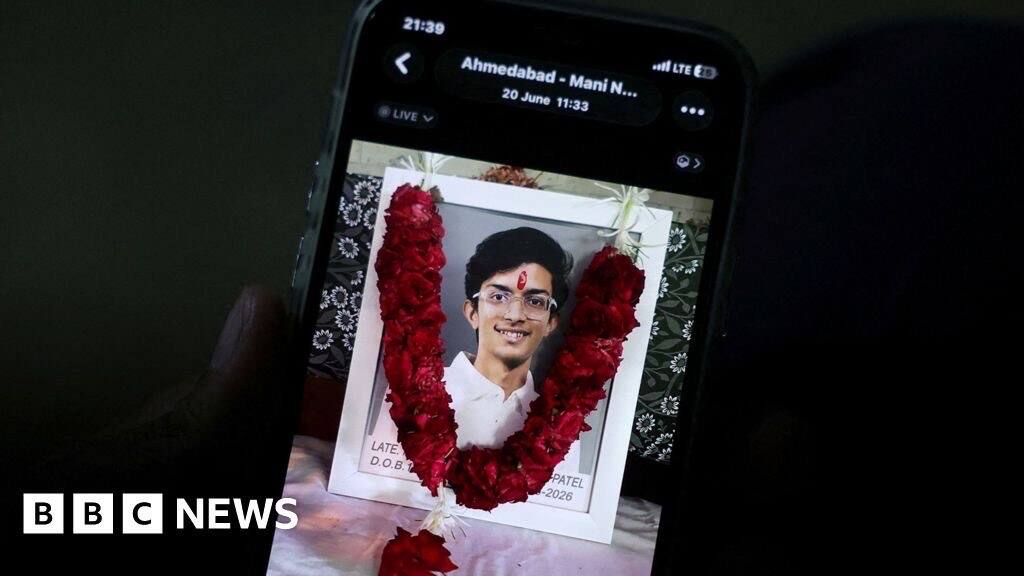
In a bedroom in Ahmedabad, a laptop still sits open on a bed scattered with textbooks, pens, and a trophy for "consistent academic performance." An electric guitar leans against an amplifier in the corner. The only thing missing is 17-year-old Kahaan Patel, who jumped from the sixth floor of his family's apartment three days before he was due to retake India's medical entrance examination.
His father, Prashant, a lawyer who split his weeks between Surat and Ahmedabad to support Kahaan's dream of becoming a doctor, remembers their last conversation. "I told him, 'You proved yourself once. You don't have to prove yourself again.'" Kahaan had emerged from his first NEET attempt in May feeling confident. Then the paper leak surfaced. The exam was cancelled. Nearly two million aspirants were told to sit it again.
"He kept asking me: 'Is this a system? Is this how it works? What is my fault? What is the fault of students who gave the exam honestly? Why is the government taking it so casually?'" his father says.
Seven hundred seventy kilometres away in Rajasthan's Jhunjhunu district, another father, Rajesh Kumar, a small farmer who sold land and borrowed more than a million rupees for his son Pradeep's coaching in Sikar, found his son's locked room on 15 May. Pradeep, on his third NEET attempt, had improved his rank steadily. The leak meant a fourth attempt.
"I sold my land to educate him. Those who have money buy question papers. Those who study honestly are left behind," Rajesh says. "The government snatched away my son. If the paper had not leaked, Pradeep would be alive today. He would have been celebrating."
Their stories, documented by BBC India correspondent Soutik Biswas in a report published 2 August, put human faces to the wave of student suicides that followed the May 2026 NEET-UG paper leak. Indian media reported at least 21 such deaths. The tragedy became the emotional core of the Cockroach Janta Party (CJP) protests that brought thousands to Jantar Mantar in July and forced Education Minister Dharmendra Pradhan's resignation on 25 July.
What we can verify
-
Kahaan Patel's death: BBC confirmed the 17-year-old died by suicide on 18 June 2026 in Ahmedabad, three days before the rescheduled NEET exam. His father Prashant Patel provided the suicide note, showed reporters Kahaan's untouched study room, and recounted their final conversations. Kahaan had secured a US visitor visa and planned a Disneyland trip after the exam.
-
Pradeep Kumar's death: BBC confirmed the death by suicide on 15 May 2026 in Sikar, Rajasthan. His father Rajesh Kumar, a farmer, showed reporters the wristwatch collection Pradeep bought from roadside shops and described the family's financial sacrifice — selling land and borrowing over ₹10 lakh for coaching.
-
Scale of the NEET leak: The NEET-UG question paper was leaked before the 3 May 2026 examination taken by over 2.2 million aspirants. The National Testing Agency cancelled the results and ordered a retest, sparking nationwide outrage.
-
CJP protests and minister's resignation: The Cockroach Janta Party, founded by Boston University graduate Abhijeet Dipke, led a sit-in at Jantar Mantar beginning early June. The movement gained momentum after police used pellet guns on protesters on 20 July. Pradhan resigned on 25 July. The government promised compensation to families of students who died and formed a reform committee.
-
Coaching-centre economy: Both families' stories illustrate the coaching-centre debt trap documented by NPR (31 July). NPR's Diaa Hadid reported on Akanksha Chaturvedi, an 18-year-old in Nagpur whose parents borrowed roughly $900 for a Physics Wallah course. Her father, a cook, fell behind on loan repayments. "She'd assuage him: 'Don't worry papa, I'm going to pay it all back,'" he told NPR.
-
Student suicide trends: NPR cites The Hindu's report that student suicides in India rose from 8,068 in 2014 to 14,488 in 2024, with roughly one-fifth occurring after exam failures.
What remains unverified
-
Exact number of NEET-linked suicides: BBC cites "at least 21" student suicides allegedly linked to the NEET cancellation, per Indian media coverage. No government or coroner dataset has been published. The figure remains an aggregate of media reports. NPR similarly cites "around a dozen" deaths.
-
Government compensation to families: Prashant Patel told BBC he had not been contacted by any official regarding compensation. A BJP municipal official claimed he tried meeting the family "two or three times" without response. Neither claim has been independently confirmed. NPR reports Akanksha Chaturvedi's mother in Nagpur similarly said no official had contacted them.
-
Whether reforms will materialise: Political scientist Šumit Ganguly told NPR he doubts the government's reform committee will produce change: "Lots of people stand to benefit from the vast bureaucracy that administers these things... including the government itself, which earns an 18% tax on payments to coaching centres."
-
Physics Wallah loan tie-in details: The franchise spokesperson told NPR the Chaturvedi family paid $10 upfront and took a loan for the remainder through a partner company. The loan terms and the company's identity were not disclosed.
A movement with parents behind it
The BBC report notes that what finally drew Prashant Patel out of grief was the students. He travelled to Delhi twice to join the CJP protests in July. "I wasn't there for compensation," he says. "I wanted accountability."
He watched students return to the streets after police action on 20 July. "I wanted to thank them because they had become Kahaan's voice. If these children can come back after being beaten and still fight for justice, that gives me strength."
"Kahaan didn't speak out," he says. "Instead, he took his own life."
Then he offers the words he wishes every parent — and every government — would hear: "Our duty is to hear the voices of the young before they fall silent."
For the families in Ahmedabad and Jhunjhunu, and for the protesters at Jantar Mantar, the question now is whether the minister's resignation and the promised reform committee will yield anything more than another commission report gathering dust. As one father put it: the system failed his son. The question is whether it will fail the next one.
Sources cited
CJP policy: every fact in this article is traceable to a public source. We never publish what we cannot verify.
- ›BBC News — NEET: How India's exam paper leak ended young lives — https://www.bbc.com/news/articles/crl7jl1d95eo
- ›NPR — From a mother's grief to a nation's fury: How an exam leak became a political storm — https://www.npr.org/2026/07/31/nx-s1-5911927/trying-to-understand-students-deaths-and-protests-in-india
Got a tip on this story? Our newsroom follows up on every lead. Reach us via the submission page.