Wangchuk: legal shield, not Pradhan exit, was non-negotiable
Sonam Wangchuk told PGX that by 22 July, a written no-FIR pledge for student protesters — not Dharmendra Pradhan's resignation — was his hunger-strike red line.
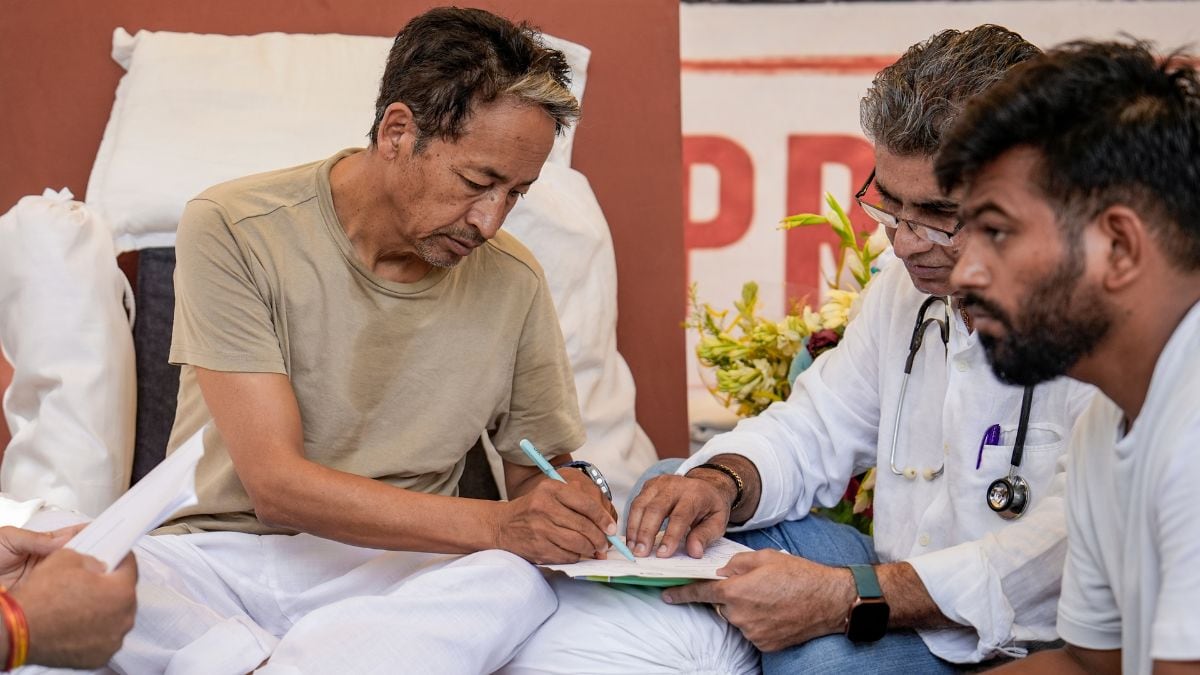
On the PGX podcast with Prakhar Gupta, climate activist Sonam Wangchuk said that by 22 July he no longer treated Union education minister Dharmendra Pradhan's resignation as the first condition for ending his hunger strike. The red line, he said, became a written pledge that student protesters would not face FIRs or other legal harassment.
The remarks, reported by Hindustan Times on 1 September and independently by Outlook, fill in how Wangchuk sequenced talks with the Centre in the last days of the Jantar Mantar sit-in. Pradhan still resigned on 25 July. Cockroach Janta Party (CJP) organisers kept that demand live after Wangchuk broke his fast; Wangchuk said he backed them.
What we can verify
Priority shifted on 22 July. "By 22 I didn't see resignation as the first priority," Wangchuk said, according to both Hindustan Times and Outlook. He added that he believed the resignation could still come: "So I started thinking that this resignation will probably happen because they should have done much earlier. Maybe they didn't have resignation in mind. If it doesn't happen, it will happen in two-four days, and there are others also demanding it."
Legal protection became the non-negotiable. "But my main point was that there should be no legal harassment," he said. "So I softened the resignation demand a little and said — you can consider accountability through resignation, but the non-negotiable is that you will not do legal harassment."
He refused a verbal-only assurance. Wangchuk said government interlocutors first offered only a spoken guarantee. He rejected it. "I said, 'If it happens, it will be written. Later, there is no honour in anything.' I want a written signature that no FIR, no legal harassment will be on any students who are exercising their fundamental right." He said he was told around 11.30pm on 23 July that the government was willing to put that in writing.
Nadda and Jitendra Singh met him in hospital. Wangchuk said Union ministers J.P. Nadda and Jitendra Singh first came to him on the night of 21 July and asked him to end the hunger strike. At that stage, he said, his list included accountability through resignation, compensation, and a parliamentary discussion on longer-term fixes. The no-FIR demand was added later.
Ladakh cases shaped the fear. He tied the legal-protection demand to the September 2025 violence in Ladakh, saying more than 80 cases were still pending a year later and that people who had tried to prevent violence had themselves been jailed. That figure is Wangchuk's account, as carried by Hindustan Times and Outlook; this report does not independently count those cases.
CJP kept the resignation demand; he supported that. After the fast was broken, CJP leaders continued to press for Pradhan's exit. Wangchuk said he supported them, arguing resignation still stood for accountability even if a new minister would not by itself overhaul the examination system. "An accountability and some responsiveness" had been achieved, he said, but he did not see a major transformation in education after Pradhan left.
What remains unverified
- Wangchuk's recollection of a "violent buildup" in Connaught Place on the night of 23 July, including preparations around metro stations and a heavy police and paramilitary presence, is his description of reports he saw; this piece does not independently confirm that night's deployment. [unverified]
- His warning that unrest could become a "civil war situation" if it spread to Mumbai, Lucknow and other cities is his characterisation, not a documented official assessment. [unverified]
- The phrase "two-three lakh people in Ladakh" in his comparison to Delhi is his wording; no sourced headcount is attached. [unverified]
- The precise text of the 23 July written assurance is not reproduced in the 1 September recaps; only Wangchuk's account of being told the government would sign. [unverified]
Context
Wangchuk's 26-day hunger strike sat alongside the CJP-led student protest at Jantar Mantar over the NEET-UG paper leak and examination failures. He has previously said CJP organisers asked him, after the 20 July police action, to help craft a message sending protesters home — a message he said he wrote but that was not posted. On 1–2 September, the Supreme Court quashed FIRs against youth protesters from the July agitation and CJP called off a 5 September Delhi march, after Centre assurances on cases and compensation. Those later court steps sit outside Wangchuk's podcast chronology; they are the public sequel to the legal-protection demand he says he made the centre of the hospital talks.
Sources cited
CJP policy: every fact in this article is traceable to a public source. We never publish what we cannot verify.
- ›Hindustan Times — Sonam Wangchuk explains why he softened Dharmendra Pradhan resignation demand — https://www.hindustantimes.com/india-news/sonam-wangchuk-explains-why-he-softened-dharmendra-pradhan-resignation-demand-101788234480116.html
- ›Outlook — Why Sonam Wangchuk Softened Dharmendra Pradhan's Resignation Demand — https://www.outlookindia.com/national/why-sonam-wangchuk-softened-dharmendra-pradhans-resignation-demand
Got a tip on this story? Our newsroom follows up on every lead. Reach us via the submission page.