
Ravi Shankar Prasad: CJP silent on Punjab, Congress-ruled states
BJP MP Ravi Shankar Prasad questions Cockroach Janta Party neutrality, alleging silence on student issues in Punjab and opposition-ruled states.
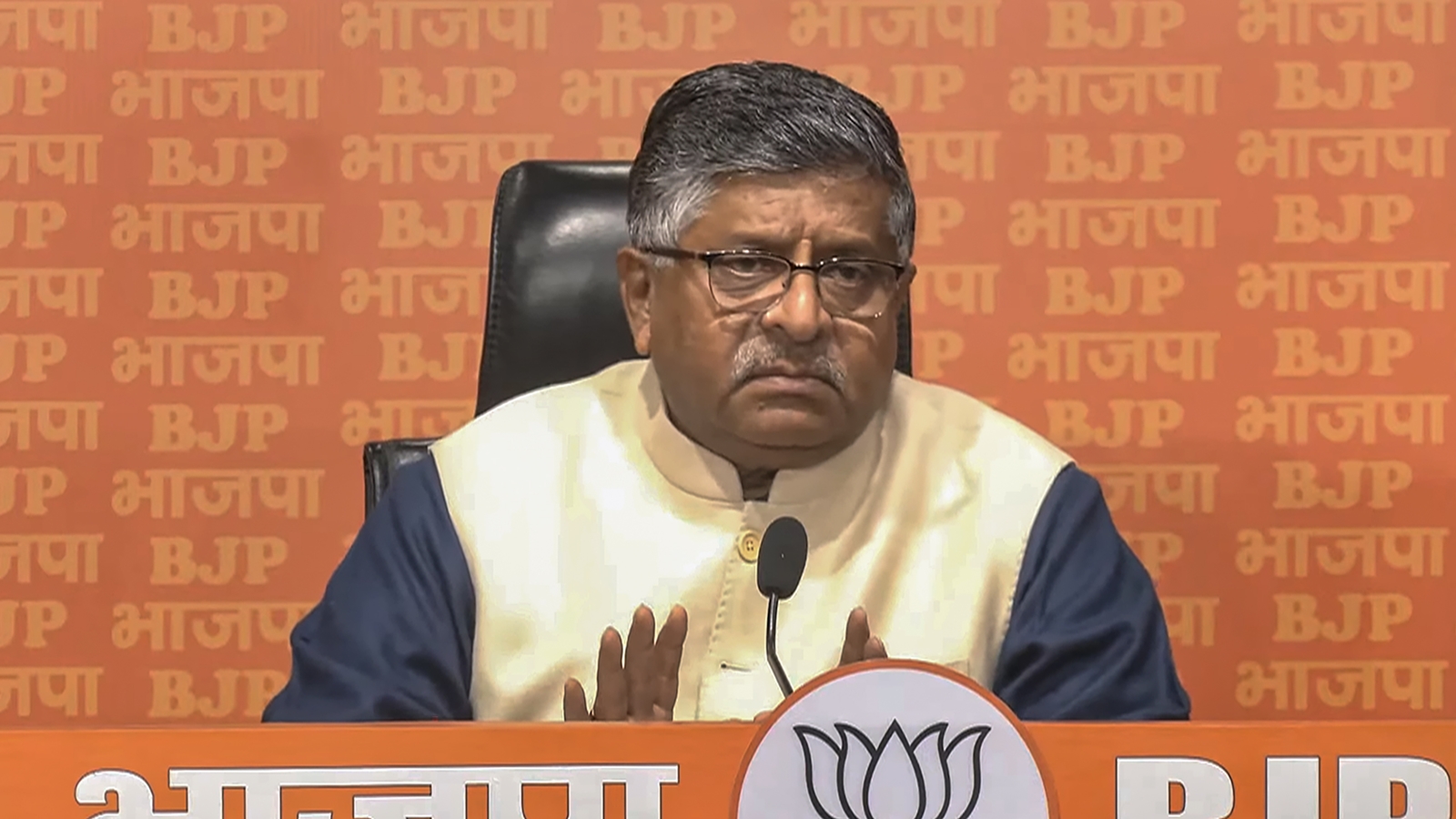
Ravi Shankar Prasad: CJP silent on Punjab, Congress-ruled states
Patna: Former Union Law Minister and senior Bharatiya Janata Party MP Ravi Shankar Prasad has questioned the political objectivity of the Cockroach Janta Party (CJP), alleging that the youth outfit has maintained a conspicuous silence over student grievances and governance failures in states ruled by the Congress and opposition parties.
Speaking in an interview with The Indian Express, the Patna Sahib lawmaker drew on his personal background in the 1974 JP Movement to criticize the unstructured nature of contemporary youth agitations, arguing that while peaceful grievance redressing is legitimate in a democracy, the CJP cannot present itself as a comprehensive remedy for all youth discontent.
"I come from an activism background (JP Movement). There must be a proper agenda and there must be a leader," Prasad told The Indian Express. "I am seeing one thing very clearly: the Prime Minister himself is addressing a lot of concerns of the youth. All of us are engaged and engagement should not be a problem. A view should be heard and measures should be taken. But the CJP cannot become a panacea for all problems. The CJP is conspicuously silent about problems in Punjab and Congress-ruled states. They need to be objective."
Electoral fallout in Bankipur
Prasad’s critique lands during heightened scrutiny of youth voting behavior across northern India, particularly in his own parliamentary constituency of Patna Sahib. In the recent Bankipur assembly by-election—an urban constituency long considered an unassailable BJP stronghold since the mid-1990s—poll strategist Prashant Kishor's Jan Suraaj party clinched a surprising victory after centering its campaign on paper leaks, youth unemployment, and the systemic education crises highlighted during the Jantar Mantar demonstrations.
Addressing the Bankipur defeat, Prasad acknowledged that examination turmoil influenced voters but insisted that a single by-election does not indicate an enduring realignment of Bihar's electorate.
"I don't minimise his [Kishor's] victory. There could be NEET and some other factors. But this [BJP's loss] cannot be the benchmark for re-orientation in Bihar politics," Prasad asserted. "Having seen Bihar politics for a long time, I can say that it takes years of hard work to win people's trust."
Divergent voices within the ruling party
Prasad's sharp remarks reflect an evolving debate within the ruling establishment regarding how best to navigate the fallout from the month-long youth mobilization that forced a change of leadership at the Union Education Ministry.
While Prasad framed the CJP's focus as one-sided and lacking formal institutional discipline, other senior party voices have taken a more conciliatory approach. Earlier this week, senior BJP leader Ram Madhav defended the legitimacy of youth demonstrations, cautioning against dividing young citizens with generational labels like "Gen Z" or "millennials" and observing that democratic dissent must be recognized as normal political expression. Madhav added that the demonstrators themselves acknowledged government concessions after Union Education Minister Dharmendra Pradhan was replaced and protest-related FIRs were dropped.
The CJP, founded in May 2026 by political strategist Abhijeet Dipke alongside student organizers following remarks by the Chief Justice of India, has repeatedly insisted that it operates strictly as an issue-based public pressure group without partisan loyalties. With the Supreme Court having quashed student FIRs under Article 142 and the planned September 5 Delhi march called off, the movement has formally redirected its grassroots resources toward inspecting basic government school infrastructure under its 'School Thik Karo' campaign.
What we can verify
- Prasad challenges CJP objectivity: Former Union Minister Ravi Shankar Prasad told The Indian Express that CJP is "conspicuously silent about problems in Punjab and Congress-ruled states" and insisted the movement cannot serve as a "panacea for all problems." — The Indian Express
- JP Movement comparison: Prasad invoked his participation in the 1974 JP Movement in Bihar to argue that sustained agitations require a clear program and leadership. — The Indian Express
- Bankipur by-election acknowledgment: Prasad conceded that "NEET and some other factors" contributed to the BJP's loss to Prashant Kishor in Bankipur, but dismissed the result as a benchmark for wider political shifts. — The Indian Express
- Internal party divergence: Senior BJP leader Ram Madhav previously described student protests as a legitimate democratic outlet and noted the resolution of key student demands. — The Indian Express
What remains unverified
- Specific instances of CJP selective silence: Prasad did not cite specific youth grievances or paper-leak incidents in opposition-ruled states that the CJP purportedly ignored. [unverified]
- Official CJP reaction: The CJP core committee and national spokespersons have not published a formal counter-statement addressing Prasad's interview. [unverified]
Sources cited
CJP policy: every fact in this article is traceable to a public source. We never publish what we cannot verify.
- ›The Indian Express — https://indianexpress.com/article/political-pulse/cjp-silent-on-punjab-congress-ruled-states-ravi-shankar-prasad-10869158/
- ›The Indian Express (Ram Madhav Interview) — https://indianexpress.com/article/india/bjp-ram-madhav-cjp-gen-z-protest-democracy-youth-10864271/
- ›Asianet Newsable — https://newsable.asianetnews.com/india/rahul-s-congress-a-party-of-anarchy-bjp-s-ravi-shankar-prasad-articleshow-7hz8tgu
Got a tip on this story? Our newsroom follows up on every lead. Reach us via the submission page.