Inside the Contempt Plea That Sparked a Movement
The Cockroach Janta Party did not appear out of thin air. It traces back to a specific contempt plea in the Supreme Court, a remark by the Chief Justice of India, and the 48 hours that followed. Here is the public record.

The 48 hours that built a movement
The Cockroach Janta Party is not a grassroots political project in the conventional sense. It was founded in response to a single remark made in open court on 15 May 2026 by the Chief Justice of India (CJI), Surya Kant. To understand the party, you have to understand what was said, by whom, in what proceeding.
The proceeding
A contempt plea was filed in the Supreme Court of India against the Delhi High Court over a delay in the designation of a senior advocate. A two-judge bench — CJI Surya Kant and Justice Joymalya Bagchi — refused to hear the case. During the exchange, Justice Kant reprimanded the petitioner's lawyer for what the bench described as unprofessional conduct on social media and the use of "frivolous" litigation targeting the judiciary.
The bench drew parallels between unemployed individuals who turn to social media, media, and public activism to attack government institutions, and the court's stated intent to direct a CBI investigation into lawyers practicing under allegedly fake degrees. That is the immediate legal context in which the remark was made.
The remark
In the course of that exchange, the CJI used a phrase that was reported in multiple outlets as follows:
"There are already parasites of society who attack the system, and you want to join hands with them?"
The remark was part of a longer judicial observation; the contested phrases that circulated in the press and on social media were "parasites" and (in later coverage attributing the same context to the CJI's broader remarks of that day) "cockroaches." The Wikipedia article on the Cockroach Janta Party records that the "cockroaches and parasites of society" framing was part of Justice Kant's drawn parallel.
The backlash
The remarks drew immediate national outrage. The AP News report on the movement, published within days, frames the CJI's comments as the proximate cause. The Guardian's piece, published on 21 May, opens with the same framing: that the movement is a direct response to the bench's choice of language.
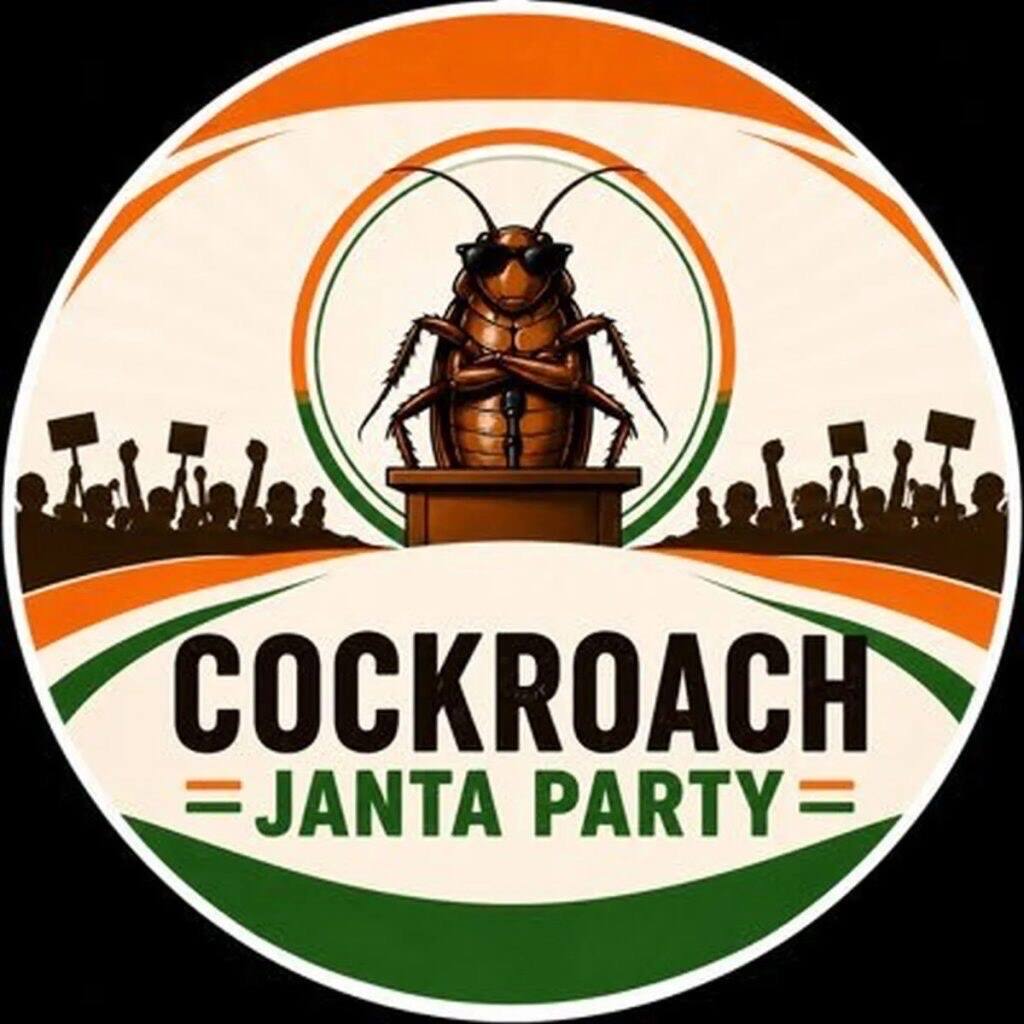
By 16 May 2026 — one day after the remark — the Cockroach Janta Party had been founded by Abhijeet Dipke, a political communications strategist who had previously worked with the Aam Aadmi Party. The party's name is a deliberate wordplay parody on the ruling Bharatiya Janata Party (BJP).
The numbers
Within days of the founding, per multiple national and international outlets reporting the same figures:
- 350,000+ sign-ups to the movement's mailing/volunteer list.
- 20+ million Instagram followers by 23 May (Al Jazeera's coverage on Facebook cites 22 million within six days).
- Volunteers participating in protests and clean-up drives in cockroach costumes, per the Wikipedia background section.
The movement is not registered with the Election Commission of India. Its founder, spokespersons, and ideological positioning are listed on the Wikipedia infobox: founder Abhijeet Dipke; spokespersons Saurav Das, Vijeta Dahiya, Ashutosh Ranka; ideology anti-corruption, political satire; colour maroon; slogan "Voice of the Lazy & Unemployed."
What the legal record does — and does not — establish
The CJP newsroom flags the following honestly:
- The CJI's reported remarks are documented across at least three independent press accounts and the Wikipedia article. We have not independently listened to the full audio of the hearing, which the Supreme Court typically does not release contemporaneously.
- The legal status of any contempt-of-court proceeding against the CJI or the bench, if any was filed, is not something this newsroom has verified from a public record. We have seen no reporting of such a proceeding.
- The press accounts cited above all agree on the core facts: 15 May remark, 16 May founding, viral social-media growth, and the satirical positioning of the party.
If you have a primary source we have missed — a written order, a court transcript, a subsequently-filed petition — please write to us at the submission page. Corrections are append-only; we will update this article with the new source.
Why the CJP newsroom is reporting on the CJP
A satirical party that is the country's fastest-growing political movement by social-media metrics is, by any reasonable definition, news. We report it the way we would report any other political phenomenon: with sources, with attribution, and with a clear separation between the party's claims (in quotes, attributed) and the newsroom's framing (above the line, ours).
— CJP Newsroom
Sources. This article is built on the Wikipedia background section, the AP News report, and The Guardian's piece — all linked in the frontmatter. Every factual claim above is traceable to one of those three.
Sources cited
CJP policy: every fact in this article is traceable to a public source. We never publish what we cannot verify.
- ›Wikipedia — Cockroach Janta Party (Background and formation) — https://en.wikipedia.org/wiki/Cockroach_Janta_Party
- ›AP News — Viral Cockroach Janta Party draws frustrated Indian youth — https://apnews.com/article/india-cockroach-janta-party-9e8be82b182e32feda4fee42d52de75b
- ›The Guardian — Parody Cockroach Janta political party's rise — https://www.theguardian.com/world/2026/may/21/cockroach-janta-party-youth-anger-frustration-protest-india
Got a tip on this story? Our newsroom follows up on every lead. Reach us via the submission page.